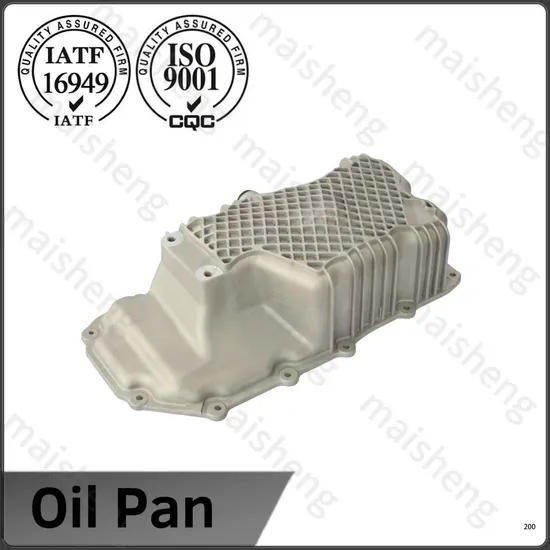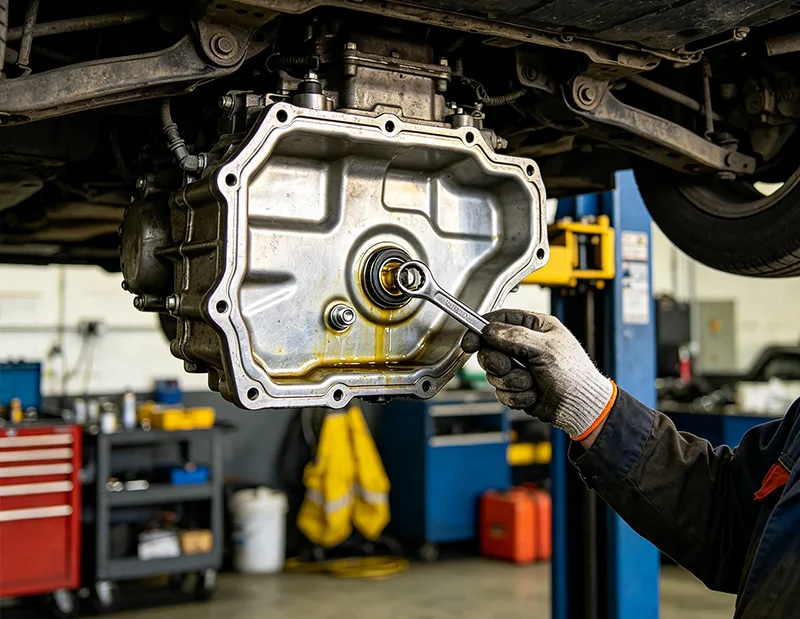



Maisheng provides precision-engineered automotive oil pans and customized component solutions for vehicle manufacturers, aftermarket distributors, and repair professionals seeking dependable engine lubrication and long-term operating reliability. An Increased Capacity Oil Pan offers a practical option for applications that require additional oil volume, careful sump design, and reliable compatibility with the engine and chassis.
An Increased Capacity Oil Pan is designed to accommodate more engine oil than a comparable standard configuration while maintaining the clearances and oil circulation required by the engine. Its potential benefits include a larger oil reserve, improved support for sustained operating conditions, and greater flexibility for specialized engine builds. However, actual performance depends on oil pump pickup geometry, sump configuration, baffle design, installation clearance, and the engine manufacturer's lubrication requirements. This guide explains how increased-capacity oil pans work, their practical benefits, material and design considerations, and the key questions buyers should address before selecting a replacement or customized component.
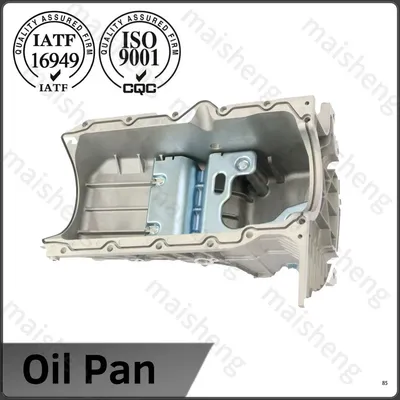
Table of Contents
1. What Is an Increased Capacity Oil Pan?
2. Why Does Engine Oil Capacity Matter?
3. Key Design Features and Engineering Considerations
4. Main Benefits of an Increased Capacity Oil Pan
5. How to Choose the Right Material
6. Common Applications and Use Cases
7. Standard vs. Increased Capacity Oil Pan
8. How to Select the Right Oil Pan
9. Manufacturing Quality and Inspection
10. Frequently Asked Questions
11. Conclusion and Purchasing Guidance
What Is an Increased Capacity Oil Pan?
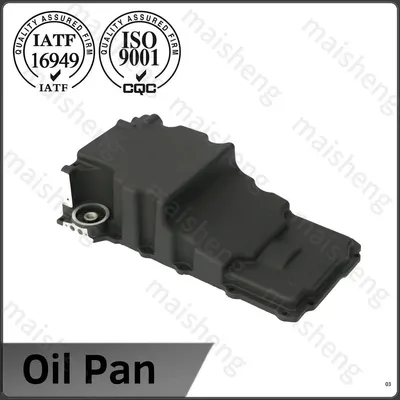
An oil pan, also called an engine sump, is installed beneath the engine crankcase and serves as a reservoir for lubricating oil. During engine operation, the oil pump draws oil from the sump and circulates it through the lubrication system to reduce friction, control wear, and support heat transfer.
An Increased Capacity Oil Pan is engineered to hold a greater volume of oil than a comparable standard pan. Depending on the application, additional capacity may be achieved through a deeper sump, an extended section, a wider reservoir, or a redesigned internal layout.
Unlike a simple container enlargement, a successful design must work with the engine's lubrication system. The oil pickup needs to remain correctly positioned, the sump must fit within the available installation space, and the oil must remain accessible to the pump during acceleration, braking, cornering, and other operating conditions.
For buyers evaluating a replacement or customized oil pan, the most important starting point is compatibility with the specific engine. Relevant information includes the engine code, mounting pattern, sump orientation, drain plug location, oil pickup arrangement, and available ground clearance.
Why Does Engine Oil Capacity Matter?
Engine oil performs several essential functions. It creates a lubricating film between moving components, helps carry heat away from critical areas, transports certain contaminants toward filtration systems, and protects metal surfaces against excessive wear.
Increasing the oil reservoir's capacity can provide additional operating margin in applications where the engine requires a larger oil supply. A greater oil volume may also help moderate temperature changes by increasing the amount of oil available to absorb and distribute heat. The actual result depends on engine design, oil circulation, cooling conditions, and the overall lubrication system.
Potential advantages of additional oil volume
- Greater oil reserve: A larger reservoir can provide more oil within the designed lubrication system.
- Thermal buffering: Additional oil may reduce the rate of temperature change under certain operating conditions.
- Application flexibility: Custom sump geometry can accommodate specialized engine configurations.
- Support for demanding operation: A properly engineered design may help meet the lubrication requirements of selected performance or heavy-duty applications.
More capacity does not automatically mean better lubrication. Oil pressure, pickup location, pump performance, aeration, and oil level remain critical. The installed oil quantity should always follow the approved specification for the engine and oil pan combination.
Key Design Features and Engineering Considerations
The performance of an Increased Capacity Oil Pan depends on more than its external dimensions. Engineers must evaluate the entire assembly to ensure that the larger reservoir functions correctly without introducing new mechanical or lubrication problems.
1. Sump geometry and usable volume
The sump determines how much oil can be stored and how it is distributed around the pickup. A deeper or extended sump can increase volume, but the design must account for the engine block, crankshaft movement, exhaust components, chassis rails, and road clearance. Usable capacity should be distinguished from the pan's total geometric volume.
2. Oil pickup and circulation
The oil pickup must maintain the required relationship with the sump floor and oil level. Incorrect positioning can contribute to oil starvation or excessive restriction. Customized designs should therefore be reviewed alongside the oil pump and pickup tube rather than as isolated components.
3. Baffles and internal oil control
Baffles can help control oil movement during acceleration, braking, and cornering. Depending on the engine configuration, additional internal partitions may help keep oil near the pickup. Their effectiveness depends on placement, opening geometry, and the vehicle's operating conditions.
4. Sealing surfaces and mounting accuracy
The flange must match the engine's mounting interface and provide a suitable sealing surface. Accurate bolt-hole positions, appropriate flange flatness, and correctly specified drain plug threads all contribute to dependable installation and reduced leakage risk.
5. Drainage and maintenance access
The drain plug should allow practical oil changes without interfering with nearby vehicle components. Its position should also support effective drainage and convenient workshop access. A well-planned design balances capacity, packaging, structural strength, and routine servicing requirements.
Main Benefits of an Increased Capacity Oil Pan
When correctly matched to an engine, an increased-capacity design can provide several advantages for vehicle operators, engine builders, and replacement-parts buyers.
Additional lubrication reserve
A larger oil reservoir can accommodate more oil within the approved system configuration. This may be useful for engines with specific lubrication requirements, provided the pump, filter, galleries, and other components are designed to operate with the selected capacity.
Potential temperature stability improvements
Engine oil absorbs heat during operation and transfers some of it through the lubrication and cooling systems. Increasing the oil volume may improve thermal buffering in certain applications, but it is not a substitute for adequate cooling capacity, correct oil selection, or temperature monitoring.
Adaptation for specialized engine builds
Performance modifications, equipment conversions, and nonstandard engine installations can create packaging or capacity requirements that differ from the original configuration. A customized oil pan may address these needs through a revised sump shape, mounting interface, or internal oil-control arrangement.
Potential support for long-term component protection
Maintaining a stable oil supply helps protect bearings, crankshaft journals, and other lubricated components. An increased-capacity pan can contribute when the original configuration lacks the required reservoir volume, but durability still depends on the complete lubrication system and correct maintenance.
How to Choose the Right Material
Material selection affects weight, rigidity, corrosion resistance, manufacturing processes, cost, and service requirements. Aluminum and steel are common options for automotive oil pans, while other materials may be used for particular engine designs.
Aluminum oil pans
Aluminum offers relatively low weight and good thermal conductivity. It is often considered for applications where weight reduction and heat transfer are priorities. Casting can also support complex shapes and integrated structural features. Buyers should assess impact resistance, wall thickness, mounting design, and the requirements of the specific application.
Steel oil pans
Steel offers useful strength, established manufacturing processes, and potential cost advantages for suitable designs. Stamped steel pans are common in many production vehicles, while fabricated steel designs can accommodate certain specialized configurations. Corrosion protection and dimensional consistency should be evaluated during selection.
Material comparison
| Evaluation Factor | Aluminum | Steel |
|---|---|---|
| Weight | Generally lower for comparable designs | Generally higher for comparable designs |
| Heat transfer | Generally higher thermal conductivity | Generally lower thermal conductivity |
| Manufacturing options | Die casting, casting, and machining | Stamping, forming, fabrication, and machining |
| Key design considerations | Wall thickness, casting integrity, impact resistance | Corrosion protection, forming accuracy, seam integrity |
| Best selection basis | Engine specifications and weight or thermal priorities | Engine specifications and strength or cost priorities |
Neither material is universally superior. The correct choice should follow the engine's original specifications, operating environment, packaging requirements, and total ownership costs.
Common Applications and Use Cases
An Increased Capacity Oil Pan may be appropriate for different engine configurations, but suitability must be confirmed for each specific application.
- Performance-oriented engines: Certain modified engines may require additional oil volume or revised oil-control geometry.
- Commercial vehicles: Selected engine configurations may benefit from a customized reservoir designed around operating requirements and installation constraints.
- Agricultural and industrial equipment: Specialized machinery may require an oil pan adapted to a particular engine layout or service environment.
- Engine conversions: Nonstandard installations may need a revised sump profile to clear chassis structures and surrounding components.
- Automotive aftermarket: Parts distributors and repair businesses may source application-specific replacement pans for established vehicle and engine models.
For every use case, buyers should verify engine compatibility before ordering. A pan intended for one engine family may not fit another, even when the overall dimensions appear similar.
Standard vs. Increased Capacity Oil Pan: What Are the Differences?
A standard oil pan is generally designed around the original equipment manufacturer's specified capacity and packaging requirements. An increased-capacity design changes the reservoir volume or sump geometry to address a particular application need.
| Comparison Point | Standard Oil Pan | Increased Capacity Oil Pan |
|---|---|---|
| Oil storage volume | Designed for the original application | Designed for a greater specified volume |
| Packaging | Based on factory installation requirements | May require revised clearance checks |
| Oil-control design | Based on original engine requirements | May require modified baffles or pickup geometry |
| Installation | Generally straightforward when application-matched | Requires confirmation of fitment and system compatibility |
| Oil quantity | Follows the standard service specification | Must follow the approved specification for the modified configuration |
| Typical purchasing priority | Direct replacement and original configuration | Additional capacity or specialized design requirements |
The decision should be based on a documented need rather than capacity alone. If the standard pan already meets the engine's operating requirements, an upgrade may provide little practical benefit.
How to Select the Right Oil Pan
Choosing the correct component involves matching technical requirements with manufacturing capability, inspection procedures, and supply expectations. The following checklist can help buyers reduce compatibility risks.
- Identify the engine: Record the engine code, model, displacement, year, and applicable vehicle or equipment details.
- Confirm the required capacity: Establish the target oil volume from reliable engineering requirements rather than estimating from external dimensions.
- Check mounting geometry: Verify the flange profile, bolt-hole positions, sump orientation, and gasket interface.
- Review internal components: Confirm oil pickup clearance, baffle layout, pump compatibility, and crankshaft clearance.
- Choose the material: Evaluate weight, strength, heat transfer, corrosion exposure, manufacturing method, and budget.
- Request technical evidence: Ask for dimensional drawings, material information, inspection records, and leakage-test requirements where applicable.
- Validate the sample: For customized projects, conduct a fitment and functional review before approving mass production.
For a custom project, useful starting documents include an existing sample, a dimensioned drawing, or clear engine application information. These help the engineering team evaluate feasibility and identify possible interference before production tooling is finalized.
How Does Manufacturing Quality Affect Oil Pan Reliability?
Consistent manufacturing quality is essential because an oil pan must maintain its shape, sealing interface, and structural integrity throughout repeated thermal cycles and engine vibration. Small dimensional errors or casting defects can create installation difficulties or potential leakage paths.
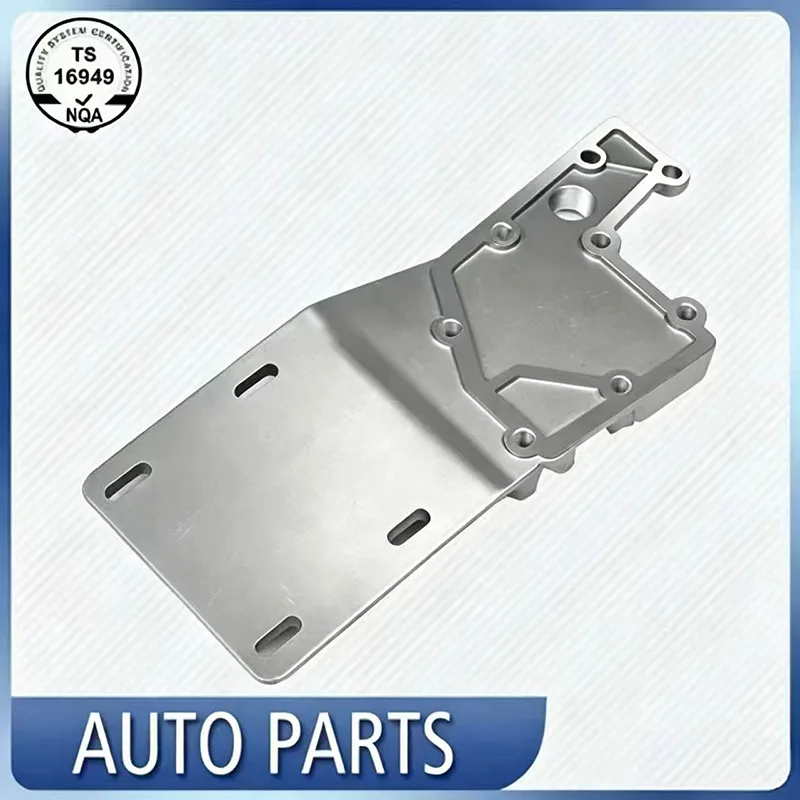
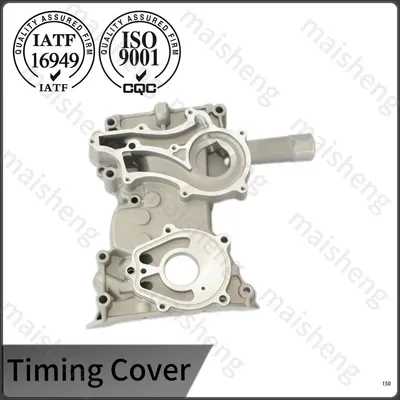
Maisheng specializes in precision automotive components, including oil pans, timing covers, fan brackets, and other engine-related parts. Its manufacturing capabilities include casting, die casting, and CNC machining, supporting standard product supply and customized development based on suitable drawings or samples.
Important quality checkpoints
- Material verification: Confirm that the selected material meets the approved design requirements.
- Dimensional inspection: Check mounting interfaces, flange flatness, hole positions, and critical clearances.
- Thread verification: Inspect the drain plug thread and related sealing features.
- Leak testing: Apply an appropriate inspection method to verify the integrity of the oil reservoir.
- Sample approval: Confirm fitment and agreed acceptance criteria before authorizing full production.
Maisheng reports IATF 16949 certification and supports customized automotive component projects. Buyers should request current certificate documentation and product-specific inspection records when these are required by their procurement or quality management systems.
For related components and manufacturing information, explore the Maisheng automotive parts website or review its product portfolio.
Frequently Asked Questions About Increased Capacity Oil Pans
1. What is the main purpose of an Increased Capacity Oil Pan?
Its primary purpose is to accommodate a larger volume of engine oil than a comparable standard pan. Depending on the application, the additional capacity may provide a greater oil reserve or help meet the requirements of a specialized engine configuration. The design must remain compatible with the oil pump, pickup, engine block, and chassis.
2. Does a larger oil pan automatically improve engine performance?
No. Additional oil volume does not automatically increase horsepower, improve fuel economy, or prevent engine wear. Any benefit depends on the engine's lubrication requirements, oil circulation, temperature conditions, and sump design. An unsuitable pan can introduce clearance or oil-control problems.
3. How do I determine the correct oil capacity?
Start with the engine manufacturer's specifications and confirm whether the stated service capacity includes the oil filter. If a customized pan changes the system volume, obtain an approved filling procedure and verify the oil level using the manufacturer's recommended method. Never assume that the pan's geometric volume equals the required operating oil quantity.
4. Can an Increased Capacity Oil Pan be customized?
Customization may be possible when engineering drawings, existing samples, or sufficient application details are available. Changes can include sump dimensions, mounting features, drain plug location, and internal oil-control components. Feasibility depends on tooling, manufacturing processes, available space, and the engine's lubrication requirements.
5. Which material is better: aluminum or steel?
Neither material is best for every application. Aluminum generally offers lower weight and higher thermal conductivity, while steel can provide a practical combination of strength, established forming methods, and cost. Select the material according to the original equipment requirements, operating environment, and intended service life.
6. What information should I provide when requesting a quotation?
Provide the engine model or code, required oil capacity, material preference, technical drawing or sample, target quantity, and any special packaging or inspection requirements. If the component is a replacement, photographs and mounting measurements can help with preliminary evaluation, although they may not replace a complete dimensional drawing.
Conclusion: Choose an Oil Pan That Matches Your Engine Requirements
An Increased Capacity Oil Pan can be a valuable solution when an engine requires additional oil volume, revised sump geometry, or application-specific oil control. The right choice depends on more than reservoir size: mounting accuracy, pickup compatibility, baffle design, material selection, sealing integrity, and verified oil-fill requirements all contribute to dependable operation.
For automotive parts distributors, equipment manufacturers, engine builders, and aftermarket buyers, working with an experienced component manufacturer can simplify customization and quality evaluation. Maisheng supports automotive component manufacturing and customized oil pan projects based on customer requirements. If you are sourcing an Increased Capacity Oil Pan for a new application or replacement program, contact us to discuss your drawings, samples, target specifications, and production needs, and identify a suitable solution for your project.