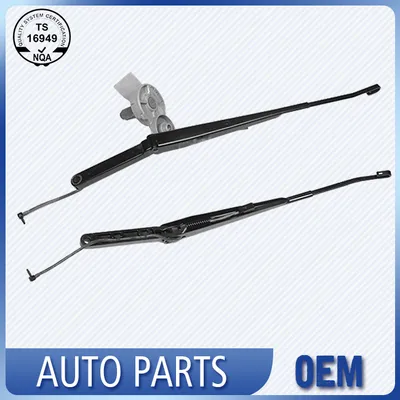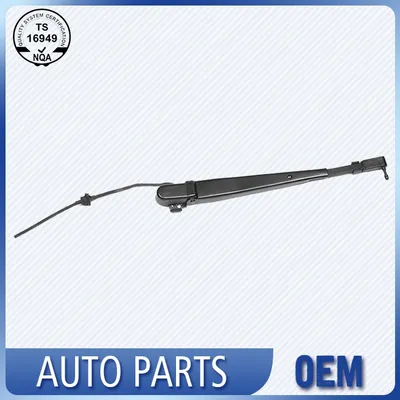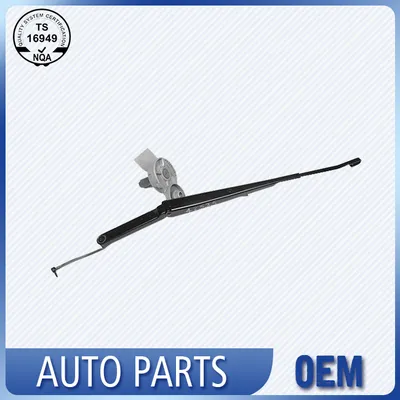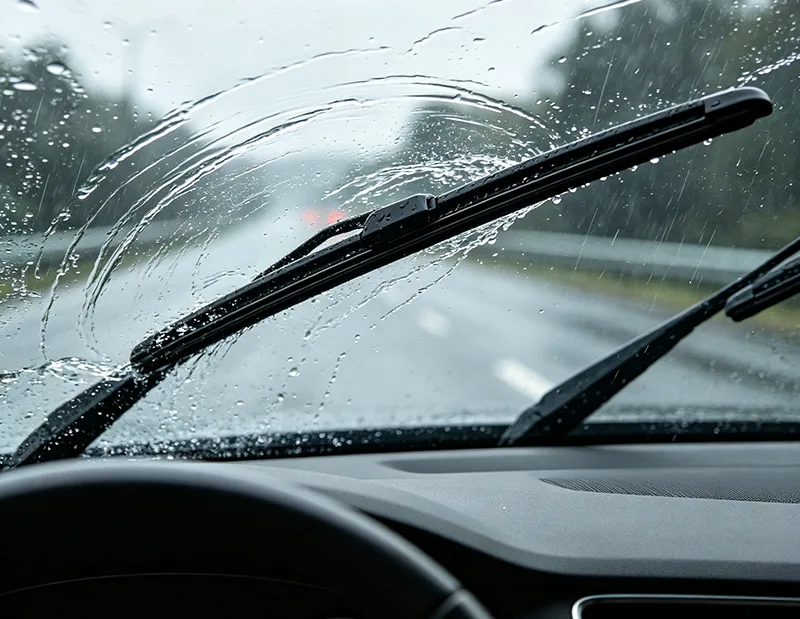

The windscreen wiper is treated as a stand-alone product family within the broader exterior components group, with its own compounding, molding and assembly sequence to prevent production overlap with unrelated part numbers. This separation enables the factory to accept spot purchases, bulk orders and model-specific OEM cooperation while maintaining the flexibility to switch between sample lots and mixed-specification consolidated shipments without rescheduling conflicts.
The wiping element relies on a refined synthetic rubber formulation that balances elasticity, tear strength and resistance to ozone and ultraviolet exposure. Before series production, compound samples are tested for Shore A hardness and tensile elongation, and the cured lip profile is inspected under a profile projector to confirm edge sharpness and contact angle. During operation, the structured frame or beam design distributes spring pressure evenly along the blade, suppressing lift and chatter at motorway speeds so that rain, road spray and loose grit are cleared in a single pass. Long-term bench trials expose complete wiper assemblies to 500,000 dry and wet cycles, after which the rubber edge must show no visible cracking or permanent set beyond 0.5 degree.
Standard lengths cover the majority of passenger cars and light commercial vehicles, while non-standard sizes can be developed from simple dimensional requests. Finished blades pass a straightness check and connector pull-out test before packaging. Distributors who replenish windscreen wipers frequently also stock Car Clamps, Auto Bearing and Timing Chain Guide, all of which are produced within the same certified manufacturing system and can be consolidated under a single supply agreement.
1. What causes a wiper blade to lose contact with the windshield at highway speeds?
A: Loss of contact is usually due to worn joint pivots, a weakened tension spring in the wiper arm, or a blade that has taken a permanent set from prolonged parking in hot sun. Replacing the blade assembly and checking the arm spring tension restores consistent pressure distribution and eliminates lift-off.
2. How should I choose between a conventional frame blade and a beam-style blade for a replacement order?
A: Beam blades use a curved spring steel spine to conform to the windshield without external frames, which improves performance in winter conditions by preventing ice buildup on the superstructure. Conventional frame blades are often more economical and work well on vehicles with simpler windshield curvature. Matching the style originally specified for the vehicle ensures correct connector fit and wipe pattern coverage.