
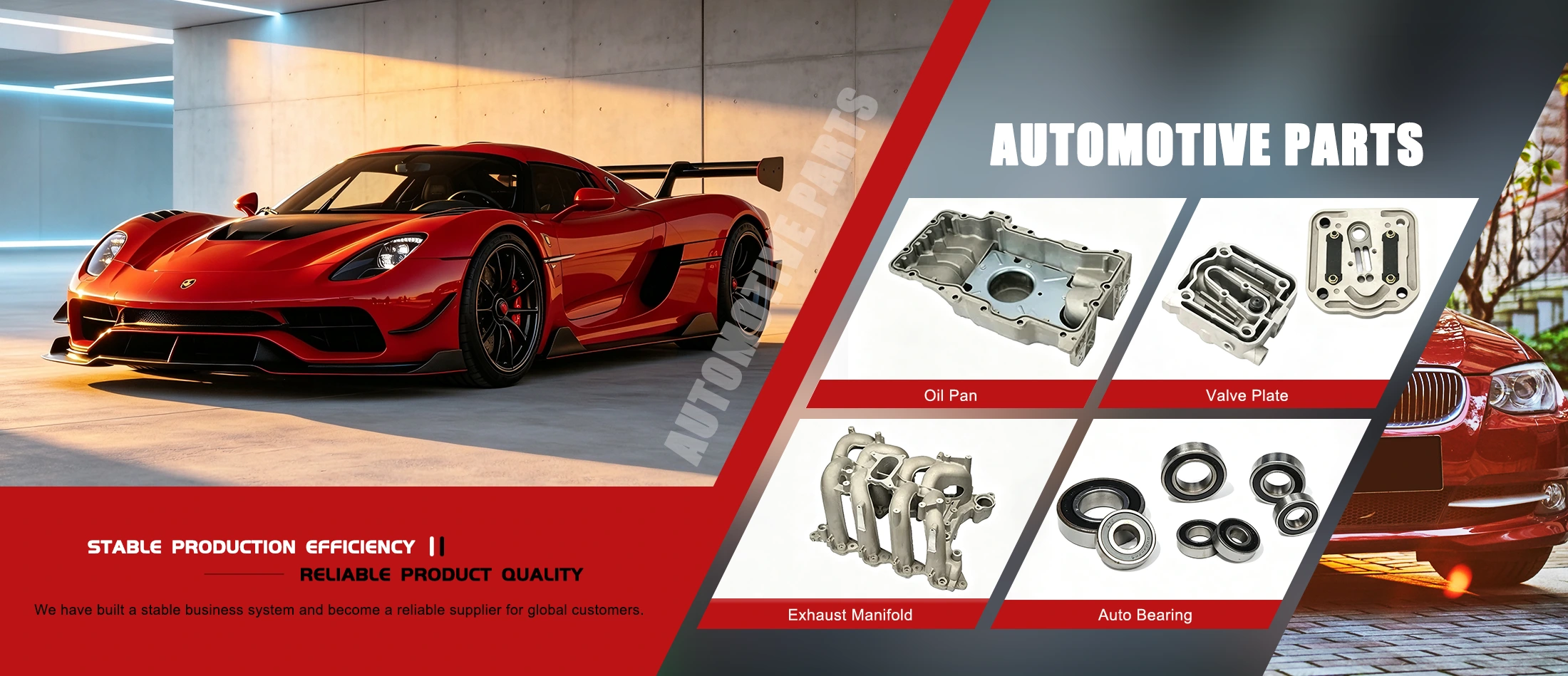
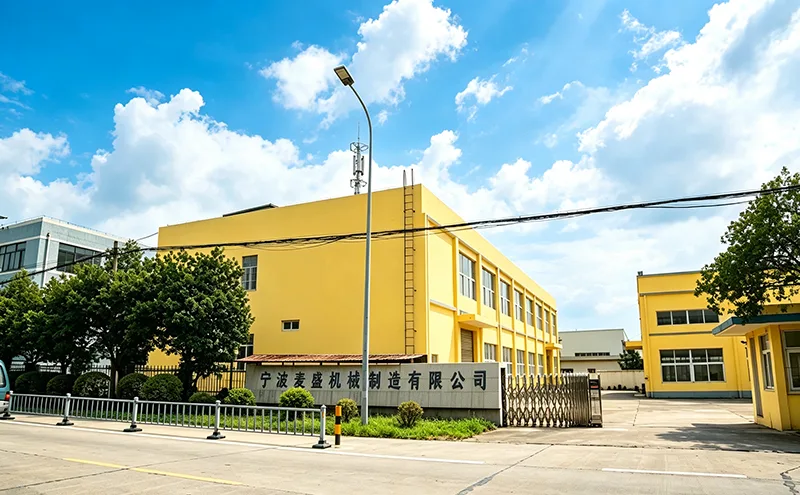
Ningbo Maisheng is an IATF 16949 certified manufacturer of precision automotive parts, with over 25 years of experience since 1999. We specialize in OEM and customized timing chain covers, oil pans, fan brackets, compressor valve plates and exhaust manifolds. Our integrated facility covers casting, CNC machining, and a dedicated quality laboratory, enabling us to supply global aftermarket distributors and OEM buyers with consistent quality and flexible order volumes. We serve customers across Southeast Asia, the Middle East, Europe and North America.


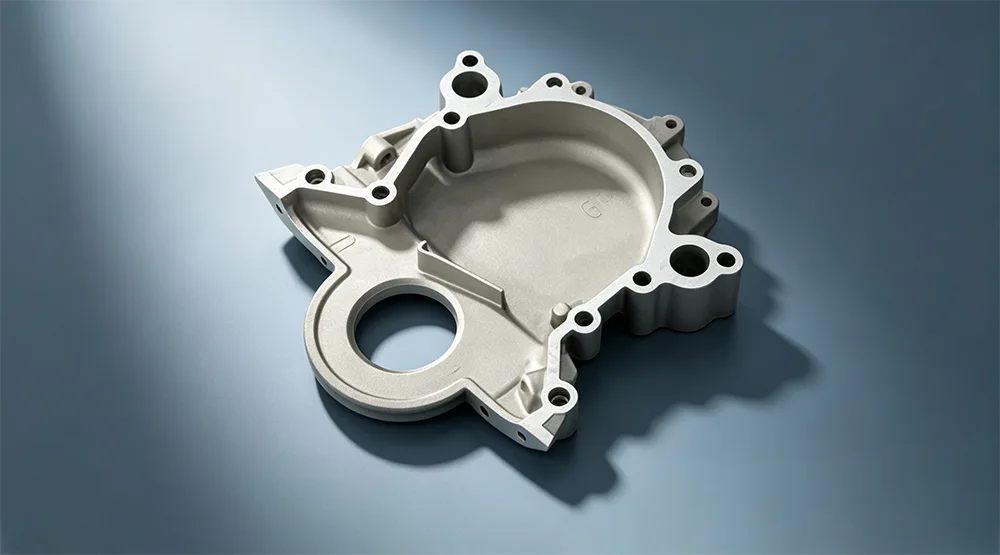
The Timing Chain Cover forms the front boundary of the engine lubrication system, enclosing the timing chain or belt assembly while retaining oil and excluding external contaminants. Maisheng manufactures these components in an integrated facility that combines casting, CNC machining and a dedicated quality laboratory, providing direct control over each production step from raw material receipt to final inspection.
Timing covers are available in two material grades to suit different engine architectures. Gray cast iron covers offer high inherent damping and dimensional stability under heavy load cycles, making them suitable for commercial diesel and high-torque applications. Aluminum alloy covers, cast from a silicon-magnesium formulation, provide weight savings and rapid heat dissipation for passenger car platforms. Both material paths include a thermal aging or stress relief cycle before machining. This step equalizes residual strains from the casting process and helps the finished cover maintain its gasket rail flatness across repeated cold start to operating temperature transitions.
The gasket flange is milled flat and bolt holes are drilled in a single CNC fixturing, referencing the crankshaft seal bore as the primary datum. Bore diameter tolerance is held within H7, while flange flatness is checked with a laser displacement system and maintained under 0.08 millimeter total indicator reading across the full perimeter. An integrated sealing groove is machined around the inner cavity edge to capture the gasket bead and resist oil creep. After machining, every cover is submerged in a water tank and pressurized with air at 0.5 bar, with zero bubble release required for acceptance. These measures are applied uniformly across standard and custom designs to prevent installation-related oil seepage and protect the timing drive from dust ingress.
Orders are processed directly from the factory, allowing adjustment of production schedules to accommodate both urgent replenishment and consolidated full container shipments for regional distribution centers. Raw material batches are verified via optical emission spectrometry, and finished component dimensional reports are archived with batch codes that link back to the corresponding melt and heat treatment records. The same quality system that governs timing cover production also covers complementary engine components such as oil pans and engine cooling fan brackets, enabling coordinated sourcing for aftermarket distributors who wish to consolidate multiple part numbers under a single quality framework.
The product range covers timing covers for a variety of gasoline and diesel engines fitted to sedans, pickups and light duty commercial vehicles. In addition to timing covers, related precision parts including compressor valve plates and exhaust manifolds are supplied to the same repair workshop and vehicle maintenance chain networks, which span the Southeast Asia, Mexico and Middle East aftermarket regions.
1.Which material should I select for a timing cover replacement on a high mileage diesel engine?
A: Gray cast iron is generally recommended for high mileage diesel applications because its vibration damping and thermal expansion characteristics closely match those of the cast iron engine block, reducing the risk of gasket movement over time. Cast aluminum is more common for modern gasoline engines where weight reduction and faster heat transfer are prioritized.
2.Can I order a timing cover that is not in your standard catalog?
A: Yes, custom covers are developed from existing samples or engineering drawings. A dedicated mold and fixturing are prepared after dimensional review, and a prototype set is supplied for trial fitment before full production. The same material certification, aging treatment and immersion testing protocols apply to custom items as to standard catalog products.
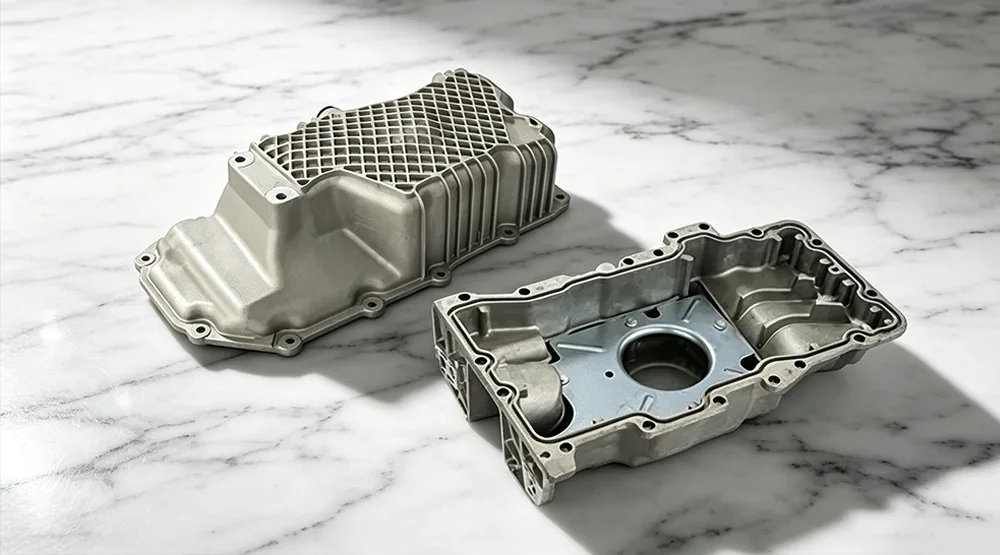
Maisheng operates two dedicated production lines for oil pans, one for aluminum die-cast components and one for gray cast iron components. This separation allows each material stream to follow its own process parameters, from pouring temperature and mold preheating to cooling rate control. Incoming aluminum ingots and foundry-grade pig iron are checked in-house using optical emission spectrometry before release to the melting deck. When customers consolidate aluminum and cast iron oil pans into a single container order, production planners can allocate capacity across both lines to shorten the overall delivery window.
Aluminum oil pans are cast from a silicon-magnesium alloy and benefit from lower mass and faster heat transfer, suiting them to mainstream passenger car engines where weight savings and thermal conductivity matter. The die-cast process delivers fine dimensional control and thin wall sections without sacrificing structural integrity. Gray cast iron oil pans use a thicker wall section and a fully pearlitic matrix, providing the shock resistance and long-term dimensional stability required for heavy-load working conditions such as agricultural machinery and light commercial truck engines. Both product types receive a milled flange face and a drain plug boss positioned per industry specification. The smooth sealing rail, combined with controlled bolt hole positions, reduces the risk of engine oil leakage after installation.
Customized oil pan dimensions are supported based on customer samples or engineering prints. Before series release, the flange flatness is verified with a laser profilometer and held under 0.1 millimeter total indicator reading, while the drain plug thread is gauged with a go/no-go fixture. Every pan undergoes a submerged air pressure test at 0.5 bar for leak detection; any continuous bubble stream triggers immediate quarantine. This test protocol is applied uniformly to standard catalog items and to new OEM designs, providing objective confirmation of sealing integrity before shipment.
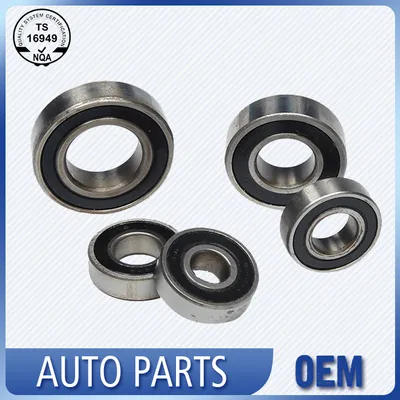
The aluminum oil pan range primarily serves the aftermarket for sedans and compact pickups, while the cast iron oil pan range covers engines used in agricultural machinery, light commercial trucks and mini construction equipment. Steady supply is maintained for repair workshops and spare parts warehouses in Southeast Asia, Mexico and the Middle East. The same certified production system that produces oil pans also manufactures Timing Chain Cover, Exhaust Manifold and Auto Bearing, enabling regional distributors to consolidate multiple engine component categories under a single quality agreement.
1. What determines whether an aluminum or a cast iron oil pan is the correct replacement?
A: The choice usually follows the original equipment specification. Engines designed with aluminum pans rely on the material's lightweight construction and heat dissipation, while cast iron pans are specified where the oil pan also contributes to structural rigidity or must withstand frequent impacts from road debris and vibration. In aftermarket replacement, matching the original material avoids differences in thermal expansion that could compromise gasket performance.
2. What is required to develop a custom oil pan that is not in the standard catalog?
A: Provide an existing sample, a dimensioned drawing, or the engine model reference. The engineering team reviews the flange pattern, sump depth and drain plug location, then produces a 3D model for approval. A prototype set is machined and tested for fitment and pressure tightness before the mold is cut for production. The same material certification, flange flatness inspection and immersion leak test are performed on custom pans as on standard products.
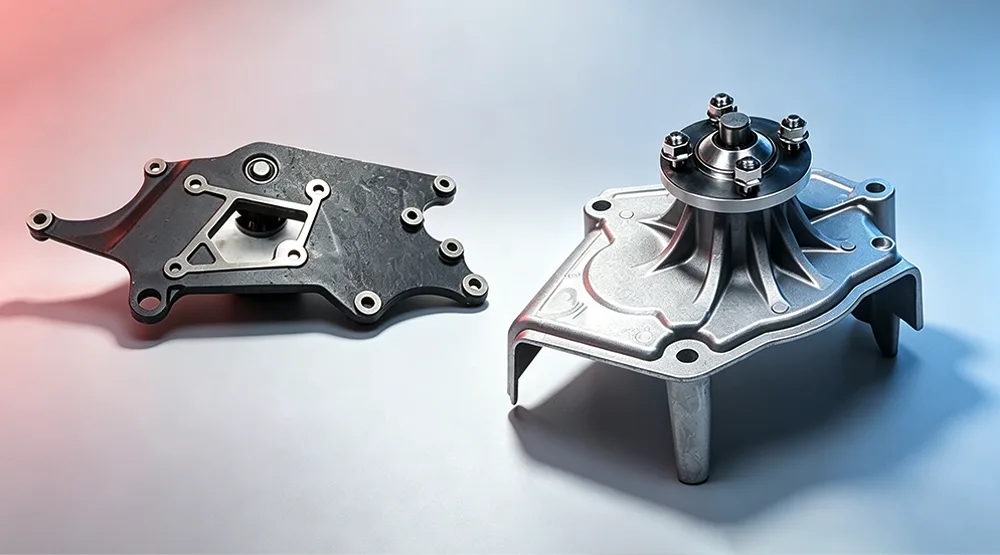
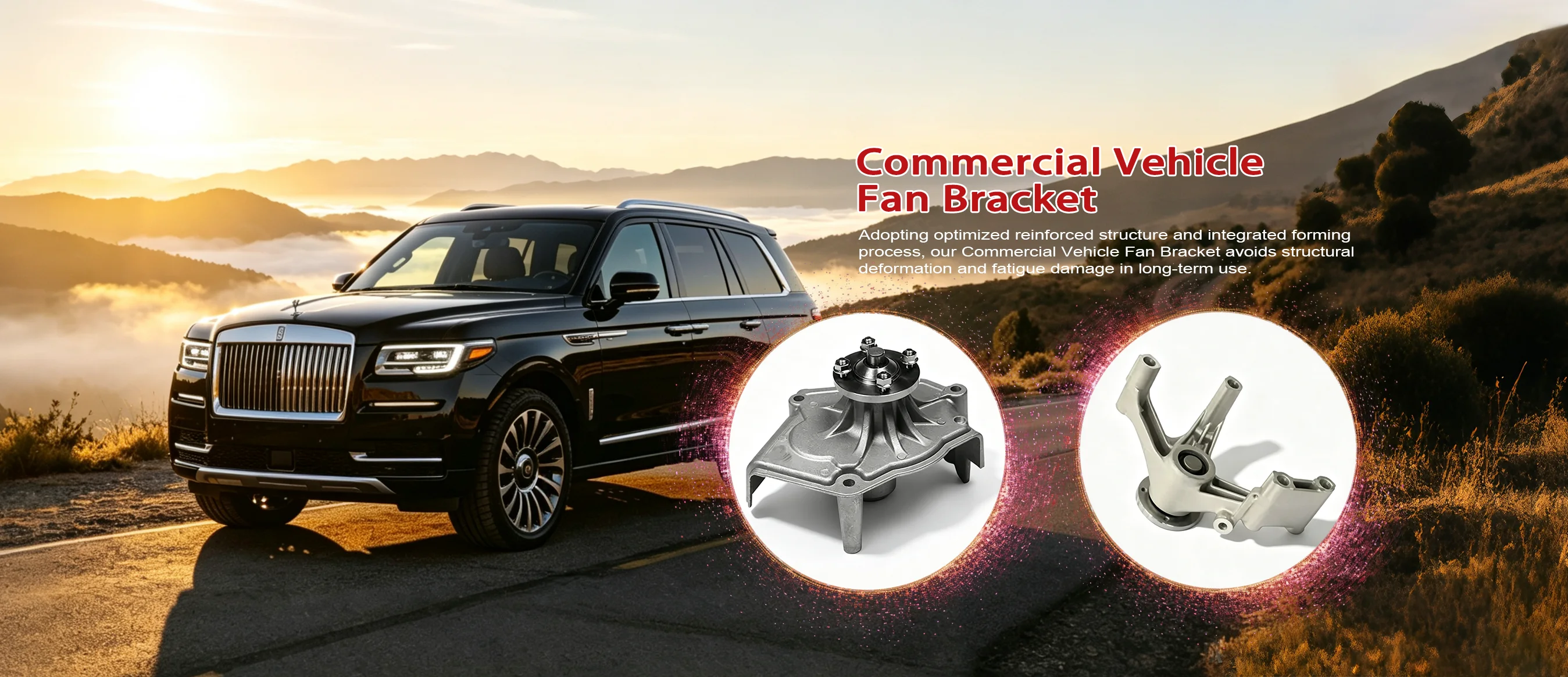
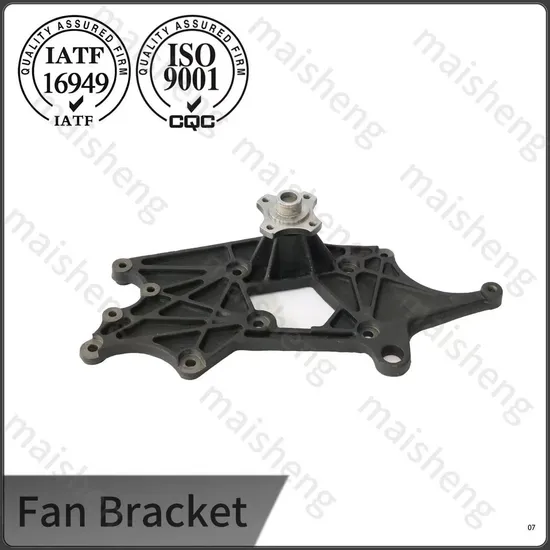
The engine cooling fan bracket serves as the structural anchor for the cooling fan, fan clutch and associated drive pulleys, maintaining precise component alignment under continuous engine vibration. Maisheng manufactures these brackets on a dedicated production cell with a standardized quality inspection flow, allowing the production schedule to be adjusted for small sample orders, OEM drawing customizations and mixed bulk procurement of multiple bracket models within a single purchase order.
Fan bracket production is organized independently from other component lines, with its own set of casting, machining and inspection stations. This configuration gives the planning team the flexibility to shift batch sizes and model variants without disrupting other product families. Spot purchase, seasonal stocking and long-term procurement agreements are all supported under the same scheduling logic. Buyers who combine several fan bracket part numbers in one container can receive a unified shipment without delay penalties, because the dedicated cell can load multiple mold changes across a single shift.
Each bracket is cast from either ductile iron or aluminum alloy, then machined to produce accurately positioned mounting holes that bolt directly to the engine block and accessory interfaces. Bore spacing and parallelism are held within 0.1 millimeter, verified on a coordinate measuring machine, so that the fan rotates concentrically without runout that would generate noise or impose radial loads on the water pump bearing. The bracket maintains its fixed assembly geometry under long-term thermal cycling and engine vibration, preventing the loose shake that can lead to belt misalignment or fan shroud contact.
The standard fan bracket range covers cooling system assemblies for passenger cars and light commercial vehicles, matching the regular stocking demands of repair shops and spare parts distributors. The same certified production system that produces these brackets also supplies Timing Chain Cover, Oil Pan and Auto Bearing, enabling regional wholesalers to consolidate several engine component categories from a single manufacturing source.
1. What causes a fan bracket to crack or lose alignment over time?
A: Common causes include over-tensioned drive belts that apply a constant bending moment, impact from road debris transmitted through the radiator support, and metal fatigue after prolonged exposure to engine vibration at resonant frequencies. A bracket with properly designed ribbing and sufficient wall thickness, combined with correct belt tension, typically lasts the life of the engine.
2. Can a fan bracket be customized for an engine swap or a high-performance radiator setup?
A: Yes. Provide the engine block interface dimensions, the fan centerline height and the pulley offset, and the engineering team will design a bracket to match. A prototype is machined from billet for test fitting before casting tooling is produced. All custom brackets receive the same dimensional audit and material certification as standard production items.
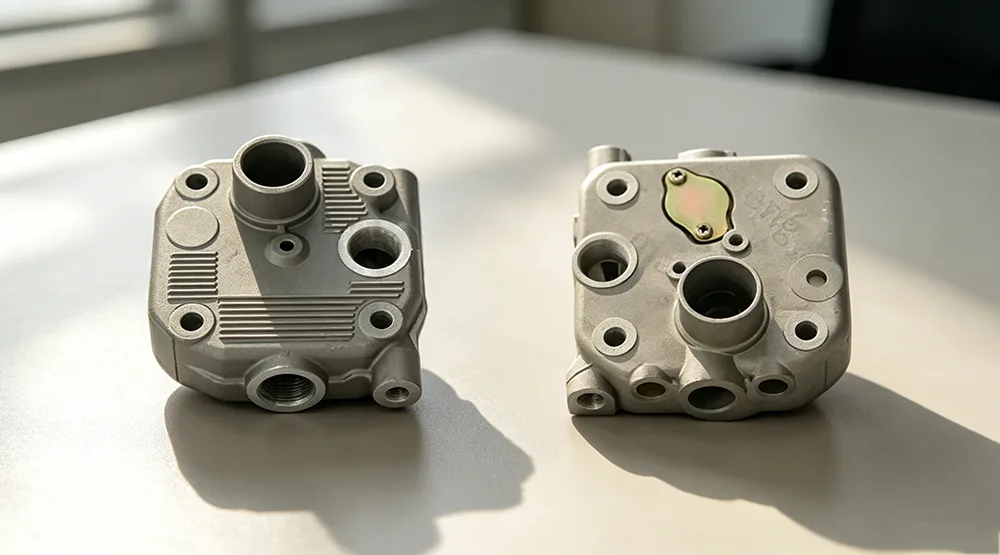
The automotive AC compressor valve plate is produced on a dedicated manufacturing cell that handles finishing, inspection and order scheduling separately from other engine component batches. This independent workflow supports spot procurement, bulk orders and drawing-based OEM development for global buyers, making it straightforward to combine sample trials and mixed-specification consolidated shipments within a single purchase cycle.
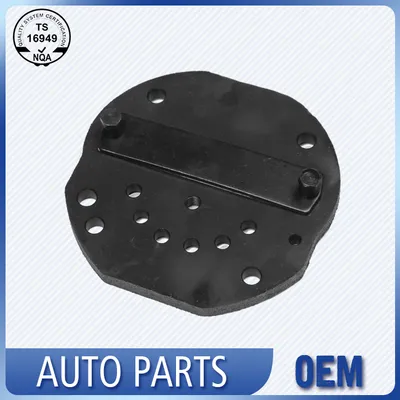
Sitting between the compressor housing and the reed valve assembly, the valve plate forms a sealed flow channel that controls refrigerant medium switching during each compression stroke. The working faces are double-disc ground to a flatness under 0.01 millimeter and a surface roughness below Ra 0.4 micron, values that are verified with a white light interferometer on every production batch. This level of surface integrity keeps the sealing band stable under cyclic pressure changes, preventing internal medium leakage that would degrade cooling performance and increase compressor duty cycle.
Non-standard dimensions are developed from customer drawings or original samples, with prototype plates machined and measured before series tooling is confirmed. Each finished plate passes a flatness check under a monochromatic light source, and bolt hole positions are audited on a vision measurement system against the datum edges. Material certificates are archived with the batch code, linking the finished valve plate to its raw stock heat number and the grinding program revision. The same inspection routine applies to periodic stocking orders, long-term framework agreements and one-off custom runs.
The standard valve plate range covers auto air-conditioning compressor assemblies fitted to passenger cars and light commercial vehicles, serving the daily replenishment needs of maintenance service providers and component wholesalers. The same certified production system also delivers Timing Chain Cover, Oil Pan and Exhaust Manifold, allowing regional distributors to consolidate multiple engine part categories under a unified quality agreement.
1. What surface condition and flatness are required for a compressor valve plate to seal correctly?
A: The sealing face needs a ground or lapped finish with a flatness of 0.01 mm or better and a roughness below Ra 0.4 µm. Any residual waviness or scratch can create a leakage path between the plate and the reed valve, reducing compressor volumetric efficiency and raising discharge temperature.
2. How do you validate that a custom valve plate will fit an existing compressor model?
A: A prototype is machined from the customer's sample or drawing, then inspected dimensionally and trial-fitted in a reference compressor housing. Flatness and hole position data are recorded before the production tooling is released. The same material certification and surface finish standards applied to series parts are maintained for custom items.
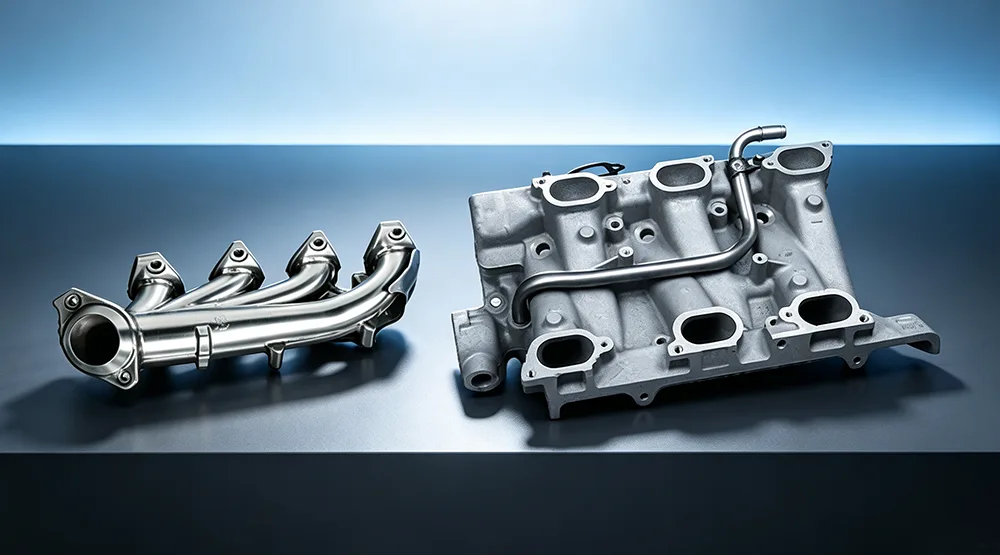
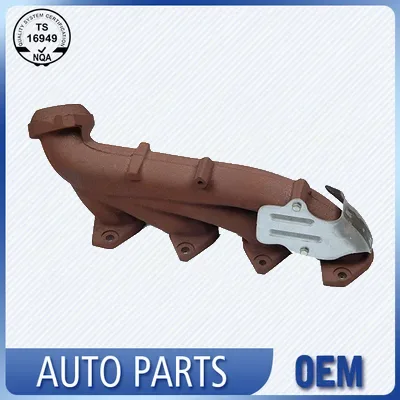
The exhaust manifold is manufactured on a production line that is planned and scheduled independently from other engine component families. This separation keeps manifold machining, assembly and inspection progress free from order conflicts, allowing the team to adjust batch sizes efficiently when buyers combine spot purchases, bulk orders and blueprint-based OEM developments in one procurement cycle. Layered in-process inspection stations are positioned along the line to verify runner dimensions, flange flatness and weld integrity as the manifold moves through each operation, which helps shorten the overall delivery cycle without compressing quality hold points.
Independent production planning for exhaust manifolds supports mixed-specification procurement, meaning that sample orders and restocking quantities for several manifold models can be processed in parallel. After casting or forming, each manifold undergoes a sequence of dimensional checks, including a coordinate measuring machine audit of the cylinder head flange and a go/no-go verification of the collector outlet. The inspection data is logged against the batch number before the manifold moves to final pressure testing, where it is pressurized with shop air and submerged to confirm a leak-free shell. This structured approach is applied uniformly to standard catalog items and to custom designs developed from customer drawings.
The exhaust manifold range covers mainstream gasoline and diesel engine assemblies found in passenger cars, light commercial vehicles and certain off-highway applications. Depending on the engine's thermal duty, manifolds are cast from high-silicon ductile iron or fabricated from stainless steel tube, both selected for their resistance to thermal fatigue and oxidation at sustained exhaust gas temperatures. The finished manifold fits directly onto the cylinder head using pre-machined mounting holes and a flat gasket flange, replacing the original equipment part without additional modification.
The same certified production system that produces exhaust manifolds also delivers Timing Chain Cover, Oil Pan and Engine Cooling Fan Bracket. Regional aftermarket distributors who restock these items can consolidate them under a single quality agreement, simplifying inbound logistics and technical documentation.
1. What is the most common cause of exhaust manifold cracking, and how is it mitigated during manufacturing?
A: Cracking typically initiates from thermal fatigue, where repeated heating and cooling cycles create stress at the junction of the runner and flange. Mitigation starts with material selection (such as high-nickel ductile iron or stabilized stainless steel) and continues with a controlled stress-relief heat treatment after casting or welding. In production, flange flatness is verified to ensure the manifold seats evenly against the cylinder head, avoiding localized bending stress that accelerates crack growth.
2. Can you supply a manifold for an engine that is no longer in production?
A: Yes, provided an original sample or detailed drawing is available. The engineering team reverse-engineers the flange pattern, runner routing and collector position, produces a prototype for fitment trial, and then releases the tooling for series production. The same material certification, dimensional inspection and pressure testing standards apply to these custom runs.

Specializing in Compressor Valve Plates, Oil Pans, Cylinder Heads, Fan Brackets & Timing Covers. IATF 16949 Certified. Full OEM/ODM Capabilities.

Six core strengths that make us a reliable, long-term partner for global auto parts buyers.
 20-Year Mold Fabrication Expertise
Professional in-house mold design for both OEM & ODM projects, handling complex parts with precision.
 In-House Full-Process Manufacturing
Complete facility with machining centers, large CNC mills, CNC drilling machines and lathes — one-stop production.
 Flexible Customization & Low MOQ
Accept customization by drawings, samples or parameters. Flexible MOQ to support your project from trial to mass production.
 IATF 16949 Certified Quality
Strict quality management. We provide test reports, material certificates, and welcome third-party inspections.
 On-Time Global Delivery
Standard parts in 7–15 days, customized parts in 15–30 days. Reliable sea, air and express shipping.
 24/7 Responsive Service
No time difference barrier. Quotes within 1–2 working days, plus lifelong technical after-sales support.

Our skilled team can realize OEM and ODM projects from concept to finished product. Whether you provide a detailed drawing, a physical sample, or just performance parameters, we design and manufacture precision parts that perfectly match your vehicle models.Our competitive edge is built on advanced manufacturing capabilities and a commitment to international quality standards.

Strict on-site management ensures stable efficiency and consistent quality.
 Pre-Sales
Technical consultation, accurate quotation in 1–2 days, sample provision for evaluation.
 In-Sales
Strict control of production quality and progress to safeguard on-time delivery.
 After-Sales
24/7 online support with rapid response to inquiries, technical issues and after-sales demands.
Yes. We provide full material certifications, dimensional inspection reports, and leak test records per batch. Our factory is IATF 16949 certified, and third-party inspections are welcomed.
Absolutely. We customize auto parts based on your drawings, original samples, or technical parameters. Our engineering team manages the entire process from mold design to prototype approval.
Samples are available (some may be charged). We provide accurate quotations within 1-2 working days after receiving your drawings or requirements.
Our core products are timing chain covers, oil pans, engine cooling fan brackets, automotive AC compressor valve plates, exhaust manifolds, and other precision engine components.
Standard parts ship in 7-15 days, customized parts in 15-30 days. We support sea freight, air freight, and international express courier services.
Yes, product samples can be provided so you can evaluate quality and fitment before placing a bulk order.
If you have any enquiry about quotation or cooperation, please feel free to email us at huyanping@nbmachinery.com or use the following inquiry form.Our sales representative will contact you within 24 hours. Thank you for your interest in our products.


