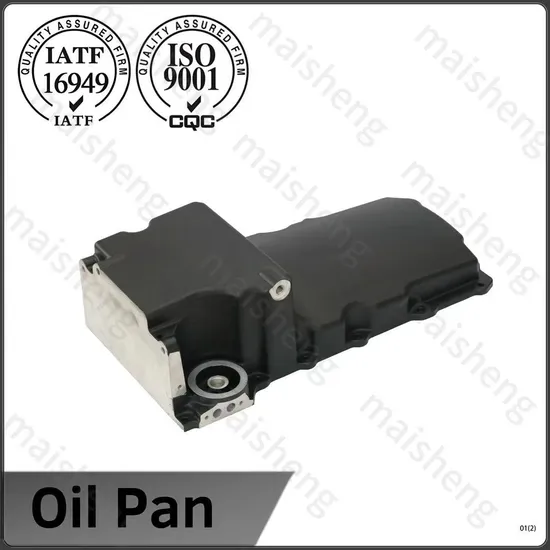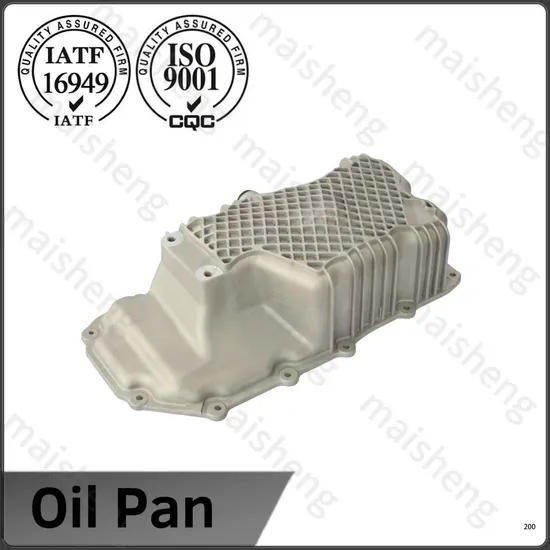

An Increased Capacity Oil Pan from Maisheng offers a practical solution for automotive applications that require greater engine oil storage capacity and dependable lubrication management. By selecting the right sump design, material, and engine fitment, vehicle manufacturers, aftermarket distributors, and repair professionals can better address demanding operating conditions and long-term maintenance requirements.
An increased-capacity oil pan is designed to accommodate more engine oil than a standard sump when additional lubrication reserves are required. Depending on the engine configuration, operating environment, and pan geometry, greater capacity can help maintain a suitable oil supply, support thermal management, and provide more flexibility for demanding applications. However, capacity alone does not guarantee better performance. Oil pump pickup position, internal baffling, ground clearance, sealing quality, and compatibility with the original engine are equally important. This guide explains how to evaluate an increased-capacity oil pan, compare materials, identify key purchasing considerations, and assess manufacturing quality when sourcing components for OEM or aftermarket projects.
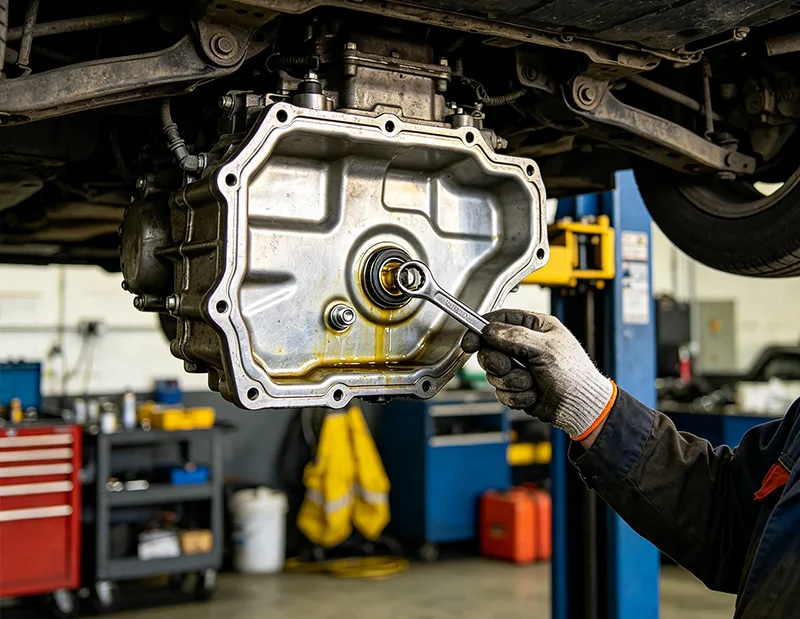
An oil pan, also known as an engine sump, is mounted beneath the engine crankcase and serves as a reservoir for lubricating oil. After circulating through the engine, the oil returns to the pan, where it remains available for the oil pump to draw back into the lubrication system.
An increased-capacity design provides additional oil storage compared with the standard configuration. This can be achieved through changes to sump depth, width, length, or other aspects of the pan's geometry. The appropriate approach depends on the available space beneath the engine, chassis restrictions, and the required oil volume.
Unlike a conventional replacement pan that primarily restores original specifications, an upgraded design may address particular operating requirements. For example, an engine used for extended high-load operation may benefit from a carefully engineered sump that provides an appropriate oil reserve while maintaining reliable oil pickup.
Nevertheless, increased capacity should never be treated as a universal performance upgrade. The pan must work with the engine's oil pump, pickup tube, crankshaft clearance, exhaust routing, and lubrication requirements.
Buyers exploring customized solutions can review Maisheng's Increased Capacity Oil Pan product information and discuss application-specific requirements before placing an order.
Engine oil performs several essential functions, including lubricating moving parts, carrying away heat, suspending contaminants until filtration, and helping protect internal surfaces against wear. The oil pan supports these functions by storing the oil needed for continuous circulation.
A larger oil reservoir can provide more available oil within the engine's lubrication system. When the system is correctly designed, this additional reserve may help accommodate the lubrication demands of certain operating conditions. The actual benefit depends on oil pump capacity, oil circulation, and the engine manufacturer's specifications.
Engine oil absorbs heat as it passes through bearings, pistons, and other components. Additional oil volume can increase the system's thermal mass, potentially slowing temperature changes under some conditions. However, a larger pan does not replace a properly designed oil cooler or guarantee lower operating temperatures.
Vehicles exposed to sustained loads, frequent acceleration, or specialized operating conditions may require a sump configuration different from the original design. An engineered oil pan can help address these needs when its shape, oil pickup, and internal features are matched to the engine.
A suitable oil pan helps maintain a reliable oil supply and provides a secure enclosure for the lubricant. Correct fitment, a stable sealing flange, and a properly designed drain plug area also help reduce leakage risks and simplify routine servicing.
The value of an increased-capacity oil pan depends on the specific engine and how the vehicle is used. Buyers should consider both the potential benefits and the engineering trade-offs before selecting a replacement or customized component.
The most effective solution balances oil capacity with packaging, lubrication reliability, protection, and serviceability. A larger reservoir is useful only when the complete system continues to operate within the engine manufacturer's requirements.
Material selection affects an oil pan's weight, stiffness, corrosion behavior, manufacturing method, and suitability for its operating environment. Maisheng's broader oil pan manufacturing capabilities include aluminum and gray cast iron components, with material choice guided by application requirements.
Aluminum alloys offer relatively low weight and good thermal conductivity. These characteristics make them attractive for many passenger vehicle applications where mass reduction and heat transfer are priorities. Casting and subsequent machining can produce complex shapes and accurately finished mounting surfaces.
Buyers should evaluate wall thickness, mounting-point strength, impact exposure, and the dimensional stability of the finished component. Alloy selection and manufacturing controls are important to achieving consistent results.
Gray cast iron can provide substantial rigidity, good vibration-damping characteristics, and resistance to certain demanding service conditions. Its greater mass may be acceptable in applications where structural robustness is more important than minimizing component weight.
As with aluminum, suitability depends on the engine's original design, mounting arrangement, and operating environment rather than material properties alone.
The following table summarizes the main considerations when evaluating these two designs. Actual performance depends on the specific product and engine application.
| Evaluation Factor | Standard Oil Pan | Increased Capacity Oil Pan |
|---|---|---|
| Oil storage volume | Designed around the original engine specification | Provides additional capacity when confirmed by the design |
| Primary purpose | Original-equipment replacement or standard service | Applications requiring a larger oil reservoir |
| Installation space | Generally follows the original packaging dimensions | May require additional clearance verification |
| Oil temperature behavior | Depends on the original lubrication and cooling system | Additional volume may improve thermal buffering in some conditions |
| Lubrication reliability | Depends on original-system design and maintenance | Depends on capacity, pickup geometry, baffling, and oil circulation |
| Refill quantity | Based on the specified engine service capacity | Must be confirmed for the complete engine configuration |
| Customization | Usually focused on matching original specifications | May support application-specific dimensional changes |
| Best selection approach | Match the original part number and engine requirements | Verify engineering compatibility and the intended operating conditions |
This comparison is intended as a selection guide, not a claim that every increased-capacity design outperforms every standard pan. A correctly specified original-equipment component may be the better choice when additional capacity is unnecessary.
For automotive manufacturers, repair businesses, and aftermarket distributors, choosing an appropriate oil pan begins with identifying the engine requirements and confirming that the proposed design fits the intended application.
Identify the engine model, vehicle configuration, existing oil pan part number, and any relevant original-equipment drawings. Do not rely on external dimensions alone, because mounting holes, sealing surfaces, and internal clearances can differ.
Establish the target oil volume with reference to the engine manufacturer's requirements and the intended application. Confirm whether the stated capacity refers to the pan's physical volume or the complete engine's service refill quantity. These measurements are not interchangeable.
Review ground clearance, exhaust routing, steering components, suspension movement, and nearby engine parts. If the pan is intended for a modified vehicle, verify that the design remains suitable throughout the expected operating range.
Ask the supplier about material specifications, machining tolerances, sealing surfaces, thread inspection, and leak testing. For customized components, drawings and sample approval can reduce the risk of fitment issues during production.
For commercial procurement, assess sample availability, minimum order quantities, customization support, packaging, lead times, and inspection documentation. These factors can be as important as the initial unit price when managing repeat orders.
For additional product options, explore Maisheng's automotive parts manufacturing solutions and discuss the specifications required for your project.
An oil pan must do more than hold lubricant. It must maintain dimensional consistency, seal correctly against the engine, and withstand the mechanical and environmental conditions associated with its intended use. Manufacturing quality is therefore a central consideration when sourcing replacement or customized components.
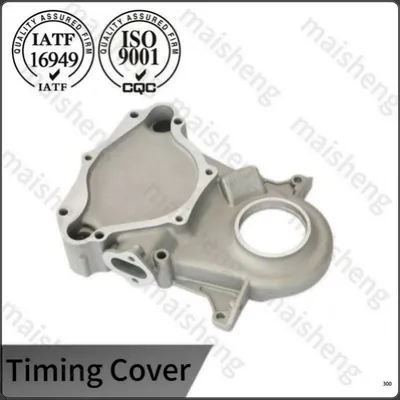
Maisheng specializes in precision automotive components, including oil pans, timing chain covers, fan brackets, valve plates, and exhaust manifolds. Its manufacturing capabilities include casting, CNC machining, and quality inspection processes that support standard and customized automotive parts.
When evaluating an Increased Capacity Oil Pan supplier, buyers should ask how the following areas are controlled:
Maisheng also supports OEM and ODM projects based on customer drawings, samples, or technical requirements. Its IATF 16949-certified manufacturing system is relevant to buyers seeking an automotive supplier with established quality-management processes. Certification, however, should not replace verification of the specific component's drawings, test results, and acceptance criteria.
For further information, buyers can review the company's automotive component product range and request documentation appropriate to their sourcing requirements.
Even a well-manufactured oil pan can develop problems if it is installed incorrectly or used outside its intended specifications. Following a consistent installation and maintenance procedure helps protect the engine and reduce avoidable service issues.
Never assume that an increased-capacity pan automatically requires a particular additional quantity of oil. Confirm the correct refill amount and oil-level checking procedure for the complete engine assembly to avoid overfilling or underfilling.
An increased-capacity oil pan stores a greater volume of engine oil than a comparable standard design. It may be suitable for applications requiring additional oil reserves, specialized sump geometry, or customized engine packaging. The correct design must remain compatible with the lubrication system and engine installation requirements.
No. Additional capacity may provide benefits under suitable operating conditions, but it does not automatically increase horsepower or improve fuel economy. Engine performance depends on the entire lubrication system, including oil circulation, pump operation, temperature control, and internal oil management.
Aluminum is often considered when low weight and thermal conductivity are priorities. Gray cast iron may be appropriate where rigidity, vibration damping, and resistance to demanding service conditions are important. The best option depends on the original engine specification, installation environment, and required mechanical properties.
Maisheng supports OEM and ODM automotive component projects using customer drawings, existing samples, or technical specifications. Buyers should provide the engine model, dimensional requirements, target capacity, material preference, and anticipated order quantity so the feasibility of a customized solution can be evaluated.
Useful information includes the original part number, engine model, technical drawings or samples, required material, target dimensions, expected oil capacity, surface treatment requirements, inspection criteria, and estimated order volume. These details help the supplier evaluate compatibility, tooling needs, and production requirements.
Request a sample for dimensional and fitment evaluation, confirm the material specification, and ask for relevant inspection and leak-test documentation. For OEM projects, agree on drawings, acceptance criteria, and sample approval procedures before authorizing series production.
Selecting an increased-capacity oil pan requires a balance of oil storage requirements, lubrication reliability, material performance, installation clearance, and manufacturing quality. A well-matched design can support demanding applications, but its value depends on compatibility with the complete engine system rather than capacity alone.
Maisheng provides automotive component manufacturing capabilities, OEM/ODM customization support, and quality-management processes for customers sourcing oil pans and related engine parts. Whether you are developing a new component, evaluating a replacement solution, or planning aftermarket procurement, clearly defined specifications and sample validation can help reduce sourcing risks. Explore the Increased Capacity Oil Pan product page to learn more about the available solution.
Looking for a dependable automotive oil pan supplier? Share your drawings, sample, engine specifications, or customization requirements with Maisheng. Our team can help you evaluate suitable manufacturing options, discuss quality inspection requirements, and identify the next steps for your project. For product details, OEM/ODM inquiries, or a customized quotation, contact us today to discuss your increased-capacity oil pan requirements.