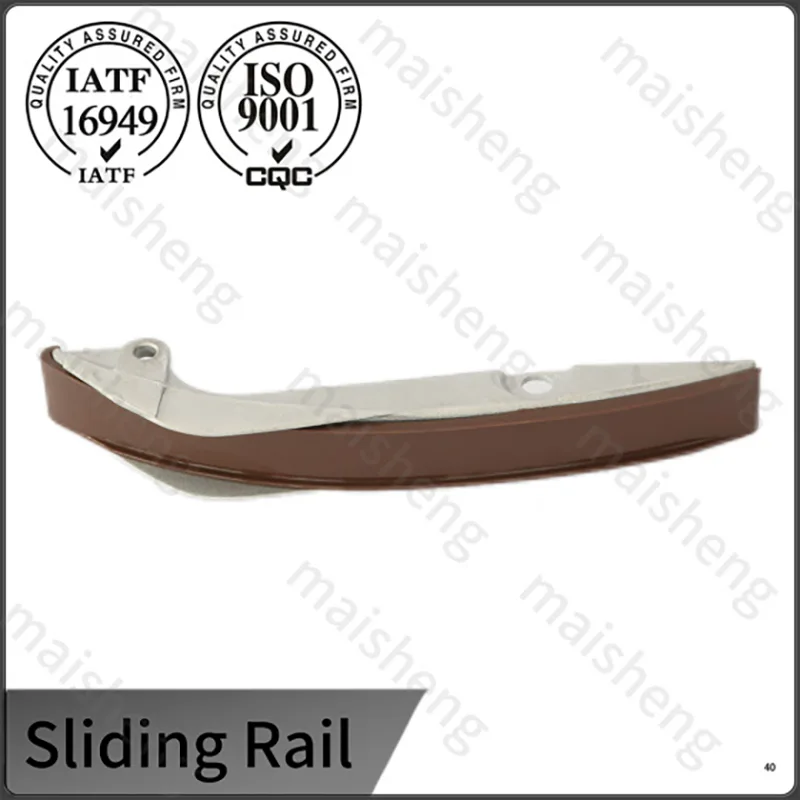

The timing chain guide is produced within Maisheng's engine timing component group, which follows a unified quality control framework across all processing stages. Procurement models include single-batch spot orders, volume stocking agreements and blueprint-based OEM development. The production planning system allocates capacity to fulfill sample lots and mixed-specification consolidated shipments without disrupting other engine part categories, ensuring that timing chain guide orders are processed alongside related timing drive components.
The primary role of the timing chain guide is to constrain the chain's path and prevent it from disengaging the sprockets during engine operation. It maintains a defined lateral and longitudinal position, allowing the tensioner to control slack consistently so that the crankshaft and camshaft remain synchronized across the engine speed range. The guide body is typically molded from a glass-fiber reinforced polyamide, with the fiber content and orientation optimized to resist wear from continuous chain contact while absorbing the harmonic vibrations transmitted through the chain links. In heavy-duty applications, a steel backing plate is bonded to the polymer face to increase structural rigidity and improve mounting stability. Material hardness, tensile strength and heat deflection temperature are verified on each incoming polymer batch using a durometer, tensile tester and DSC analysis, respectively, ensuring the guide will retain its shape and low friction surface across hot and cold engine cycles.
Finished guides are measured against the original equipment reference dimensions using a coordinate measuring machine, with particular attention to the chain contact curvature and bolt hole center distances. The sliding face profile is compared to a master template to confirm it will support the chain without introducing lateral twist. A representative sample from each production batch is mounted on a test rig that simulates a complete timing drive, running for 1,500 hours at a controlled oil temperature of 120 degrees Celsius. After the test, the guide is inspected for cracking, delamination or excessive wear depth; a wear limit of 0.3 millimeter is applied before the component is considered acceptable for series supply. This validation data is archived alongside the batch number and material certificate.
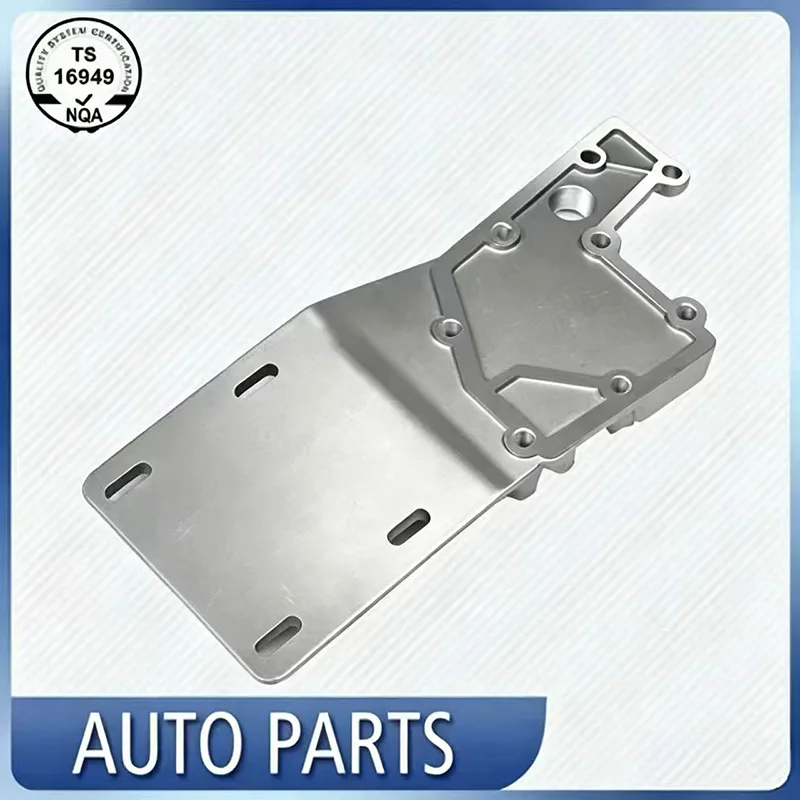
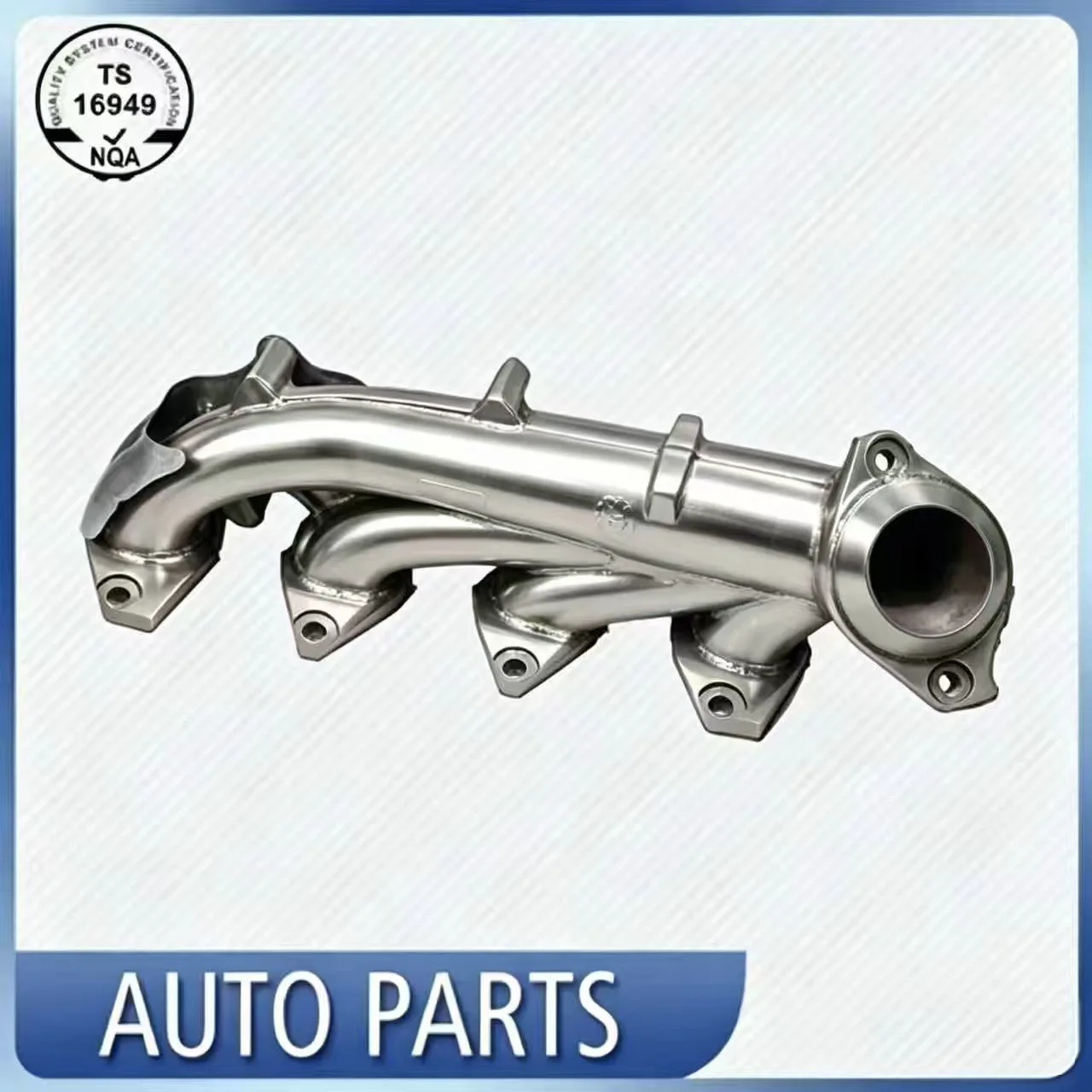
The timing chain guide fits the majority of passenger car and light commercial vehicle engine platforms, serving as a regularly replaced wearing part for engine overhaul workshops and repair suppliers. Within the same certified production system, other engine components such as Auto Bearing, Engine Cooling Fan Bracket and Exhaust Manifold are also manufactured, enabling distributors with periodic replenishment or long-term sourcing agreements to consolidate multiple part numbers under one quality and logistics arrangement.
1. What symptoms suggest a timing chain guide is worn and needs replacement?
A: A rattling or slapping noise from the front of the engine, especially during cold starts, is a common indicator. In more advanced cases, the check engine light may illuminate due to camshaft-to-crankshaft correlation faults, and visible plastic fragments can be found in the oil during a filter inspection. Replacing the guide before the chain loses tension helps prevent skipped timing and valve-to-piston contact.
2. Can a custom timing chain guide be produced for an engine that uses a non-standard chain pitch or sprocket layout?
A: Yes. Provide the chain pitch, sprocket center distance and bolt pattern, or supply an original sample for reverse engineering. A prototype is machined from billet polymer for trial assembly before injection mold tooling is produced. The same material certification, dimensional measurement and wear test standards are applied to custom guides as to standard catalog items.