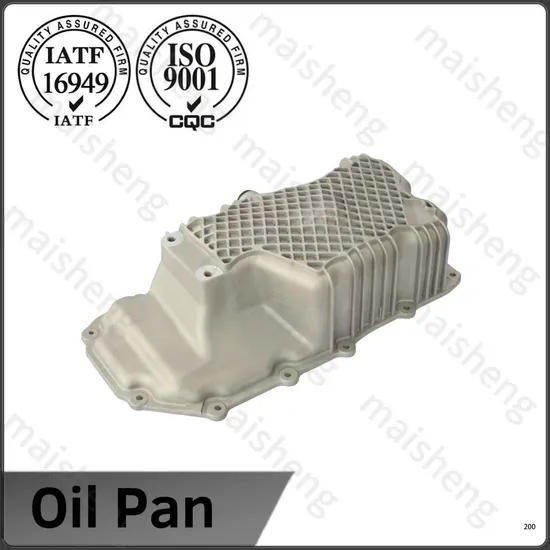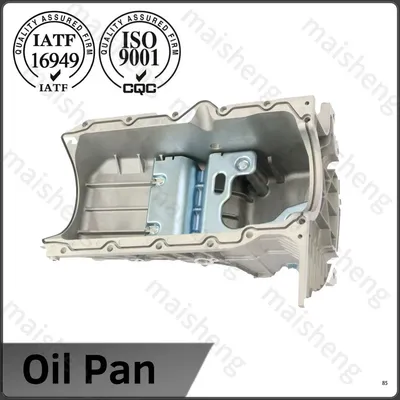

Maisheng supplies the Corrosion Resistant Coated Oil Pan for automotive engines, commercial vehicles, agricultural machinery, and construction equipment that operate in demanding environments. Designed to resist moisture, road salt, mud, and surface oxidation, this coated oil pan helps protect critical engine components while supporting dependable sealing, reduced maintenance requirements, and longer service life. For OEM manufacturers, fleet operators, and aftermarket distributors, choosing the right corrosion protection is an important step toward improving component durability and controlling operating costs.
A corrosion resistant coated oil pan does more than collect and store engine oil. Its protective surface treatment helps reduce rust formation caused by humidity, saline environments, road debris, and prolonged outdoor exposure. When combined with accurate metal forming, reliable sealing surfaces, and appropriate quality inspections, a coated oil pan can contribute to dependable engine operation and lower lifecycle costs. This article explains how corrosion-resistant coatings work, which selection factors matter most, how to compare oil pan options, and what buyers should verify before placing an OEM or aftermarket order.
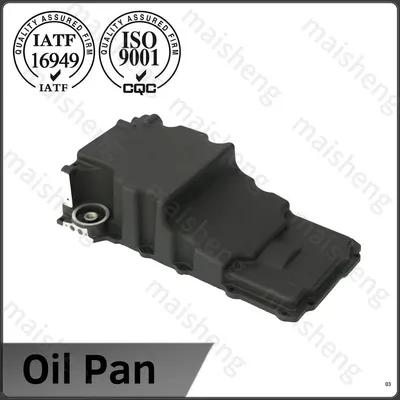
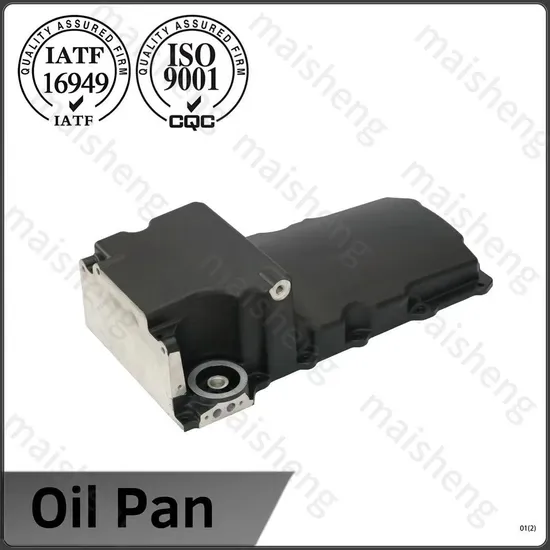
An oil pan is a fundamental component of an engine lubrication system. It serves as a reservoir for engine oil and is typically installed beneath the engine block. Depending on the engine design, it may also incorporate a drain plug, mounting flange, baffles, and provisions for oil-level or temperature sensors.
A corrosion resistant coated oil pan uses a protective surface finish to reduce the exposure of its underlying metal to moisture, oxygen, salts, and other corrosive contaminants. Compared with an unprotected or inadequately protected metal surface, a properly applied coating can help delay oxidation and preserve the component's external condition during demanding service.
Maisheng's product information identifies the Corrosion Resistant Coated Oil Pan as model OP701B, with metal construction, customized specifications, and OEM-oriented supply options. The product is intended for applications where corrosion resistance and consistent installation dimensions are important purchasing considerations.
Buyers can review the Maisheng corrosion resistant coated oil pan product page for product details and inquiry options.
Oil pans are positioned close to the road or working surface, exposing them to conditions that can accelerate corrosion. Rainwater, muddy splashes, deicing salts, coastal air, and repeated wet-dry cycles can gradually damage an inadequately protected surface.
Corrosion is not merely a cosmetic issue. If it progresses sufficiently, it can weaken localized areas, damage protective finishes, or contribute to leakage when vulnerable areas or sealing interfaces deteriorate. A damaged oil pan can lead to oil loss, unplanned maintenance, and vehicle downtime.
These risks are especially relevant in the following environments:
Choosing a suitable coated oil pan helps address these risks, although its actual performance depends on the coating system, substrate preparation, application quality, mechanical damage, and maintenance practices.
A corrosion-resistant coating creates a barrier between the metal substrate and its surrounding environment. By limiting direct contact with moisture, oxygen, and dissolved salts, the finish helps slow the electrochemical processes responsible for rust formation.
Different coating systems offer different performance characteristics. Maisheng's product description discusses cathodic electrophoretic coating and high-crosslink-density polyester powder coating as possible protective approaches. The appropriate system should be confirmed for the specific part and application.
Before coating, the metal surface should be properly cleaned to remove drawing lubricants, oils, and contaminants. Depending on the selected process, additional conversion treatment may be used to promote coating adhesion and improve corrosion protection. Poor preparation can compromise even a technically advanced coating system.
Electrophoretic coating uses an electrical process to deposit a coating onto conductive components. Powder coating applies a dry coating material that is subsequently cured under controlled conditions. Both approaches can provide useful protective coverage when the process is correctly specified and controlled.
Coating thickness, adhesion, surface coverage, and resistance to corrosion should be assessed using suitable inspection methods. Cross-cut adhesion tests, impact testing, and salt-spray testing may be relevant, depending on the agreed specification.
Salt-spray results should be interpreted carefully. Laboratory exposure hours are not a direct prediction of real-world service life, because actual performance also depends on temperature, salt concentration, stone impacts, coating damage, and maintenance.
A well-engineered Corrosion Resistant Coated Oil Pan can deliver several practical benefits when matched to the intended operating environment.
These benefits depend on selecting the correct product configuration and maintaining the component in accordance with the engine manufacturer's requirements. A protective coating cannot compensate for incorrect installation, unsuitable material thickness, or severe mechanical damage.
Different oil pan designs serve different operating requirements. Buyers should compare corrosion protection alongside weight, structural needs, cost, repairability, and compatibility with the intended engine.
| Oil Pan Type | Primary Consideration | Potential Advantage | What Buyers Should Check |
|---|---|---|---|
| Corrosion resistant coated metal oil pan | Surface protection | Helps limit rust caused by moisture and salts | Coating adhesion, coverage, thickness, and damage resistance |
| Standard uncoated metal oil pan | Basic component construction | May have a lower initial purchase cost | Exposure conditions and additional corrosion protection requirements |
| Aluminum oil pan | Material properties and weight | Can offer lower mass than some steel designs | Strength, casting or forming quality, corrosion behavior, and fit |
| Increased-capacity oil pan | Oil volume and lubrication-system design | Provides additional oil capacity when the engine is designed for it | Clearance, oil pickup compatibility, capacity, and coating options |
No single oil pan design is ideal for every engine. A coated metal oil pan may be particularly attractive when external corrosion is a major concern, while an aluminum or increased-capacity design may be preferred for other engineering reasons. The final choice should reflect the engine manufacturer's specifications and the operating environment.
For OEM purchasing teams, automotive parts distributors, and equipment manufacturers, choosing the correct corrosion-resistant oil pan requires more than matching a product name. The component must fit the application and meet the required durability and manufacturing standards.
Start by identifying the engine model, vehicle platform, installation position, and relevant part number. Check mounting-hole locations, flange geometry, overall dimensions, and clearance around nearby components. A dimensionally incompatible oil pan can create installation difficulties or interfere with surrounding equipment.
Describe the expected service conditions, including exposure to road salt, humidity, mud, cleaning chemicals, and temperature changes. This information helps the supplier recommend an appropriate coating system and validation plan.
Before confirming a design, establish the required oil capacity, drain plug thread and position, sensor ports, baffle arrangement, and sealing requirements. Customization should be agreed upon before production tooling and manufacturing processes are finalized.
The lowest purchase price does not always represent the best long-term value. Buyers should consider expected service conditions, inspection requirements, replacement frequency, warranty provisions, and potential downtime when comparing suppliers.
For a more efficient RFQ process, prepare the following information:
Consistent manufacturing quality is essential for an oil pan that must resist corrosion while maintaining reliable sealing and fit. A robust quality plan should cover the component's geometry, surface finish, coating performance, and functional integrity.
| Inspection Item | Purpose | Typical Verification Approach |
|---|---|---|
| Dimensional accuracy | Confirms compatibility with the engine assembly | Drawing-based dimensional inspection and fixture checks |
| Coating thickness | Checks whether the finish meets the agreed specification | Suitable calibrated coating-thickness measurement |
| Coating adhesion | Evaluates resistance to separation from the substrate | Specified cross-cut, pull-off, or other applicable adhesion test |
| Corrosion resistance | Assesses performance under defined corrosive exposure | Salt-spray or other agreed environmental testing |
| Leakage and sealing | Checks functional integrity where applicable | Appropriate leak testing and sealing-surface inspection |
| Traceability | Supports investigation and batch consistency | Production records, inspection reports, and batch identification |
Acceptance criteria should be established before mass production. Buyers should request the relevant inspection records and clarify whether testing is performed on finished parts, representative samples, or coating coupons. Any stated salt-spray duration or coating tolerance should be confirmed against the actual product specification rather than assumed to apply to every order.
Corrosion-resistant oil pans are useful wherever the underside of a vehicle or machine faces persistent moisture or corrosive contaminants. The specific benefits depend on the severity of exposure and the quality of the protective system.
For OEM projects, it is advisable to assess corrosion protection together with mounting accuracy, oil-system compatibility, vibration exposure, and service requirements. A coating specification should support the full component design rather than be treated as an isolated purchasing feature.
A corrosion resistant coated oil pan stores engine oil while providing a protective surface intended to reduce rust and oxidation. It is particularly relevant to vehicles and equipment exposed to moisture, road salt, mud, and other corrosive conditions.
Maisheng's product information describes cathodic electrophoretic coating and high-crosslink-density polyester powder coating as protective approaches. Availability and suitability should be confirmed for the required model, coating specification, and operating environment.
Yes. Maisheng indicates support for OEM customization, including application-specific dimensions, drain plug configurations, sensor ports, and other design requirements. Buyers should provide technical drawings and confirm the final specifications before tooling approval.
Increased-capacity configurations may be available with corrosion-resistant surface treatment, subject to the specific design and application. Confirm the required capacity, engine compatibility, oil pickup arrangement, and available coating options with the supplier.
Request the agreed coating specification, thickness and adhesion inspection results, relevant corrosion-test reports, dimensional inspection records, and applicable functional test results. Confirm the test methods, acceptance criteria, sampling plan, and traceability requirements before approving the production batch.
No. A coating reduces exposure of the substrate to corrosive conditions but cannot guarantee complete immunity to corrosion. Scratches, stone impacts, damaged edges, harsh chemicals, and poor maintenance can reduce protection. Regular inspection and prompt repair of damaged areas remain important.
Provide the engine model, vehicle application, part number, drawings, target quantity, coating requirements, material preferences, drain plug and sensor details, inspection criteria, packaging needs, and delivery expectations. Complete specifications help the supplier assess feasibility and prepare a more accurate quotation.
A corrosion resistant coated oil pan is a practical option for protecting engine components against the moisture, road salt, mud, and environmental exposure encountered in demanding applications. Its long-term value depends on the combination of an appropriate coating system, sound surface preparation, dimensional accuracy, reliable sealing, and documented quality control. For OEM manufacturers, fleet operators, and aftermarket distributors, evaluating these factors together helps support more informed purchasing decisions and dependable equipment operation.
Maisheng offers corrosion-resistant coated oil pan solutions with OEM customization options for different engine and equipment requirements. If you are sourcing a dependable oil pan for a new project, a replacement program, or bulk purchasing, contact us to discuss your application, technical drawings, coating specifications, and order requirements. Our team can help you evaluate a suitable configuration for your project and move toward a more durable, cost-effective component solution.