
Picture a modern vehicle cruising down the highway at 120 km/h. Inside its wheels, engine, and transmission, dozens of Auto Bearing components are working in perfect synchrony, each supporting rotating shafts while enduring immense radial and axial loads. A single bearing failure can cause wheel seizure, transmission damage, or complete engine breakdown—yet today's vehicles routinely travel over 300,000 kilometers without a single bearing-related issue. What has made this remarkable reliability possible? The answer lies in four interconnected technological revolutions: advanced materials that resist fatigue at the microscopic level, ultra-precision manufacturing that eliminates stress concentrations, sophisticated sealing systems that keep contaminants out, and emerging smart technologies that predict failures before they occur. These advancements have transformed the humble Auto Bearing from a simple mechanical component into a highly engineered system that underpins the safety and longevity of every vehicle on the road.
This evolution is not accidental. It is the result of decades of research into tribology (the science of friction and wear), metallurgy, and manufacturing process control. Today's Auto Bearing operates under conditions that would have been unthinkable just twenty years ago: temperatures exceeding 150°C in wheel hub applications, rotational speeds over 10,000 RPM in turbochargers, and exposure to water, salt, and abrasive dust. Yet failure rates have declined by an order of magnitude. This article will dissect the specific technological breakthroughs driving this reliability revolution—from the steel that forms the bearing's core to the sensors that may one day allow your car to "tell" you when a bearing needs attention. We will explore the engineering philosophy behind each advancement and provide practical insights for professionals who specify, maintain, or manufacture these critical components.

An Auto Bearing is a precision-engineered mechanical component that enables rotational or linear movement while reducing friction and supporting loads. In the context of automotive applications, Auto Bearings are found in virtually every moving assembly: wheel hubs, transmissions, engines, steering systems, alternators, and even turbochargers. To understand their function, imagine the human skeletal system—bones provide structure, but joints allow movement. Auto Bearings are the "joints" of a vehicle, allowing components to rotate smoothly while supporting the weight and forces generated during operation.
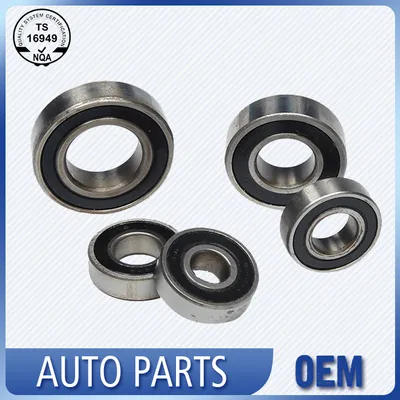
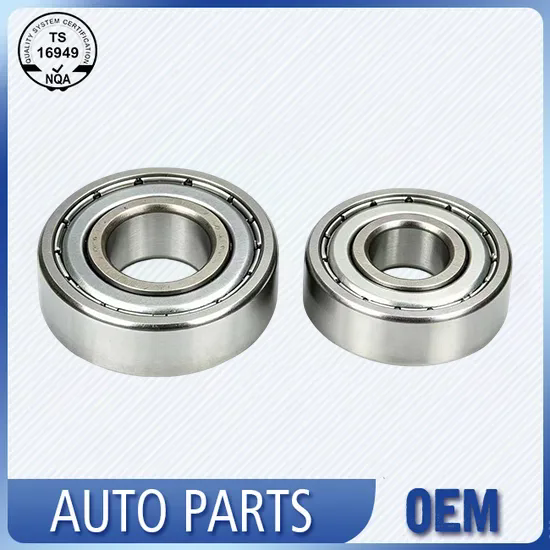
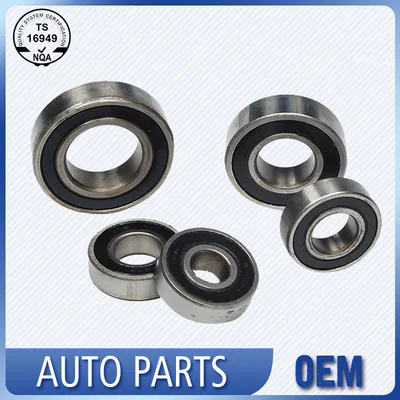
The basic anatomy of an Auto Bearing is remarkably consistent across types. It consists of four primary elements: an inner ring (which mounts to the rotating shaft), an outer ring (which fits into the housing), rolling elements (balls, rollers, or needles) that bear the load and reduce friction, and a cage or retainer that keeps the rolling elements evenly spaced. Additionally, most modern Auto Bearings incorporate seals or shields to retain lubricant and exclude contaminants. The selection of each element's material, geometry, and finish determines the bearing's load capacity, speed capability, and service life. The most common types of Auto Bearings used in vehicles include:
The evolution of the Auto Bearing from a simple steel ring to today's high-tech component mirrors the evolution of the automobile itself. Early bearings were unsealed, required frequent lubrication, and had service lives measured in tens of thousands of kilometers. Today's Auto Bearings are sealed-for-life units that can outlast the vehicle itself. This transformation has been driven not by any single breakthrough, but by the relentless pursuit of excellence in materials science, manufacturing precision, and quality control.
In the world of Auto Bearings, the story of reliability begins with a single, often overlooked factor: the material. Consider the case of a traditional wheel bearing manufactured in the 1980s. Its steel contained impurities such as non-metallic inclusions—microscopic particles of alumina or silicate that acted as stress concentrators. Under the cyclic loading of everyday driving, these inclusions would initiate micro-cracks. Over tens of thousands of stress cycles, the cracks would propagate until a section of the raceway spalled, leading to rough operation, noise, and eventual failure. This was not a design flaw; it was a material limitation.
Today, the Auto Bearing industry has largely overcome this limitation through the adoption of high-purity bearing steels. The modern standard, typically a modified version of SAE 52100 (also known as GCr15), is manufactured using advanced refining processes such as vacuum degassing and electroslag remelting. These processes reduce oxygen and inclusion content to historically unprecedented levels. The result is a steel that is fundamentally more resistant to fatigue. Our factory has observed that the L10 life (the life at which 90% of a population of bearings will survive) of a modern Auto Bearing made from high-purity steel is typically 3 to 5 times longer than that of an equivalent bearing made from conventional steel.
Beyond steel chemistry, the heat treatment process is equally critical. An Auto Bearing must possess a hard, wear-resistant surface on its raceways, while maintaining a tough, impact-resistant core. This is achieved through precision carburizing or induction hardening, followed by controlled tempering. The metallurgical goal is to achieve a microstructure of tempered martensite with a fine, uniform grain size. This structure maximizes hardness (typically 58-62 HRC on the Rockwell scale) while minimizing the risk of brittle fracture. In recent years, our factory has also implemented advanced case hardening techniques that produce a deeper, more consistent hardness profile, further extending the fatigue life of our Auto Bearing products.
For applications demanding the absolute highest performance, such as racing or heavy-duty commercial vehicles, ceramic hybrid bearings are increasingly used. These Auto Bearings feature rolling elements made from silicon nitride (Si3N4) ceramic, which is lighter, harder, and more corrosion-resistant than steel. Ceramic rolling elements generate less heat at high speeds and can operate without lubrication for short periods, a critical advantage in emergency situations. While the cost is significantly higher, the performance gains in speed capability and service life are substantial. We at Ningbo Maixun Machinery Manufacturing Co., Ltd have developed expertise in manufacturing and supplying both steel and ceramic hybrid Auto Bearing solutions, offering our customers a choice based on their specific performance requirements and budget constraints.
Even the highest-quality steel will fail prematurely if not manufactured with sufficient precision. The journey of an Auto Bearing from a steel billet to a finished component is a story of relentless reduction in tolerances. Consider the critical surfaces: the raceways and the rolling elements. Their surface roughness, roundness, and dimensional accuracy directly determine the bearing's life and performance. A single scratch or a deviation of a few microns on a raceway surface can create a stress riser that initiates fatigue cracks, dramatically shortening the bearing's life.
The manufacturing process for a modern Auto Bearing is a carefully choreographed sequence of operations. It begins with the forging of steel rings, which aligns the grain flow of the material to improve strength. The rings are then turned to approximate dimensions, followed by heat treatment to achieve the required hardness profile. But the real precision comes in the grinding and superfinishing stages. Here, ultra-hard grinding wheels and abrasive stones are used to achieve surface roughness values (Ra) of less than 0.1 micrometers on the raceways. This mirror-like finish is essential for the formation of a reliable lubricant film, which prevents metal-to-metal contact and reduces friction and wear.
The rolling elements—balls, rollers, or needles—undergo a similar journey. They are ground and lapped to tolerances measured in fractions of a micron. In a modern Auto Bearing, the sphericity of a ball is typically within 0.05 micrometers, and its diameter is matched to the other balls in the bearing to within a few micrometers. This ensures that the load is distributed evenly among all rolling elements, maximizing the bearing's load capacity and service life. Our factory has invested in high-precision CNC grinding machines and automated lapping lines that maintain these tolerances consistently across millions of components.
Perhaps the most significant advancement in manufacturing precision is the integration of in-process measurement and feedback. Modern grinding machines are equipped with sensors that continuously measure the component's dimensions and adjust the grinding parameters in real time. After grinding, every Auto Bearing undergoes a comprehensive inspection process, including measurements of radial clearance, vibration level, and torque. A typical inspection line might include a vibration analyzer that detects any sub-surface defects, a roundness tester, and a gaussmeter for magnetic particle inspection. The data from these inspections is recorded and analyzed, allowing our factory to continuously improve its processes and identify any emerging quality issues before they can affect our customers.
To illustrate the impact of precision, consider the following comparison of typical parameters for a standard Auto Bearing versus a high-precision version.
| Parameter | Standard Auto Bearing | High-Precision Auto Bearing |
| Raceway Roughness (Ra) | 0.2 - 0.4 µm | < 0.1 µm |
| Ball Sphericity | 0.1 - 0.2 µm | < 0.05 µm |
| Radial Runout | 5 - 8 µm | < 3 µm |
| Vibration Level (acceleration) | 35 - 45 dB | < 25 dB |
| Calculated L10 Life | 100,000 km | 300,000+ km |
Two of the most significant threats to an Auto Bearing's reliability are the ingress of contaminants and the loss of lubricant. A bearing that is otherwise perfectly designed and manufactured can fail prematurely if it is not adequately sealed or lubricated. This is particularly true in automotive applications, where bearings are exposed to water, road salt, brake dust, and extreme temperature variations. The sealing and lubrication systems of modern Auto Bearings are the unsung heroes of their remarkable service life.
Consider a wheel bearing installed on a vehicle that frequently drives on unpaved roads. Dust and grit can penetrate even the smallest gap between the bearing's rings. Once inside, these abrasive particles act like sandpaper on the highly polished raceways and rolling elements, causing rapid wear. Similarly, water ingress can lead to rust and corrosion, which generate abrasive particles that accelerate wear. To combat these threats, a multi-layered sealing system is essential. The evolution of sealing technology has been remarkable: from simple felt washers in the early 20th century, to rubber contact seals in the mid-century, to today's sophisticated labyrinth and magnetic seals.
Modern Auto Bearings commonly employ what is known as a "sealed-for-life" design. This typically involves a rubber seal that is pressed into a groove in the outer ring and lightly contacts the inner ring. The seal acts as a barrier to contaminants while keeping the grease lubricant inside. More advanced designs incorporate multi-lip seals, where multiple sealing lips provide redundant protection. In some high-performance applications, labyrinth seals—where the seal and the rotating ring form a tortuous path that water and dust cannot easily navigate—are used. Our factory offers a range of sealing options tailored to specific environments, from standard contact seals for general use to advanced labyrinth seals for off-road and heavy-duty applications.
Lubrication is the other half of the reliability equation. The grease used in an Auto Bearing is not a simple oil; it is a carefully engineered mixture of base oil, thickener, and additives. The base oil provides the lubrication film, the thickener holds the oil in place, and the additives (such as anti-wear agents, antioxidants, and rust inhibitors) protect the bearing surfaces under extreme conditions. The selection of the correct grease is critical: a grease that is too stiff will generate heat and increase friction, while a grease that is too thin will not provide adequate protection. For most automotive applications, a lithium complex or polyurea thickened grease with an ISO VG 68-100 base oil is recommended. However, for high-temperature applications such as engine bearings, a synthetic grease with a higher viscosity index may be required. Our factory offers customized Auto Bearing greasing solutions, with the ability to specify the grease type and quantity to match the application's operating conditions.
| Seal Type | Protection Level | Typical Application |
| Single-Lip Contact Seal | Moderate | Passenger car wheels (standard) |
| Double-Lip Contact Seal | High | Passenger car wheels (premium), light trucks |
| Labyrinth Seal | Very High | Off-road, agricultural, heavy-duty trucks |
| Magnetic Seal | Extreme | High-speed performance, racing |
The next frontier in Auto Bearing reliability is not about better steel or tighter tolerances—it is about intelligence. The concept of the "smart bearing" integrates sensors directly into the bearing assembly, enabling real-time monitoring of critical operating parameters such as temperature, vibration, and rotational speed. This data can be transmitted to a vehicle's onboard computer or to a cloud-based system, where advanced algorithms analyze the data to predict potential failures before they occur. This is the essence of predictive maintenance: moving from a reactive schedule of repairs to a proactive system where maintenance is performed only when necessary, based on the actual condition of the component.
Consider a fleet of commercial vehicles. Each vehicle might have dozens of Auto Bearings in its wheels, transmission, and engine. Traditionally, fleet managers would rely on fixed maintenance intervals, inspecting or replacing bearings at predetermined mileage markers. This approach is inefficient: bearings are often replaced while still in good condition, incurring unnecessary cost and downtime, or conversely, they may fail prematurely because they were not replaced in time. A smart bearing system changes this equation dramatically. A sensor in each bearing continuously monitors its health and sends an alert to the fleet management system when a change in vibration pattern or temperature indicates an impending failure. Maintenance is then scheduled at the optimal time, minimizing vehicle downtime and maximizing the utilization of the bearing's full service life.
The technology behind smart bearings is rapidly evolving. Early versions relied on simple accelerometers or thermistors, but today's systems incorporate advanced MEMS (Micro-Electro-Mechanical Systems) sensors that can measure multiple parameters simultaneously. The signals are processed by an integrated micro-controller that filters out noise and analyzes the vibration signature. Machine learning algorithms can be trained to recognize specific patterns associated with different failure modes—such as spalling, brinelling, or lubrication degradation—allowing for a more precise diagnosis. For the auto bearing industry, this is a disruptive trend. It shifts the value proposition from a purely mechanical component to an integrated sensing and monitoring solution.
Our factory is already preparing for this future. While we continue to manufacture traditional Auto Bearing with the highest quality standards, we have also developed a smart bearing platform that allows for the integration of our customers' sensors. By designing our bearing housings with accommodation for sensing elements and communication ports, we are future-proofing our products. This approach gives our customers the flexibility to choose their own sensor technology while benefiting from our precision manufacturing expertise. We believe that the smart bearing will not only improve the reliability of modern vehicles but will also revolutionize the aftermarket industry, enabling a shift from reactive maintenance to a true condition-based service model.
Question 1: What are the common signs that an Auto Bearing is failing and needs to be replaced?
Answer: The most common symptoms include a whirring or roaring noise that increases with vehicle speed, especially during turns; a feeling of looseness or play in the wheel; vibration in the steering wheel or floorboard; and in severe cases, noticeable heat from the wheel hub. A failing Auto Bearing may also cause the vehicle to pull to one side or cause uneven tire wear. If you suspect a bearing issue, it is advisable to have the vehicle inspected promptly. We at Ningbo Maixun Machinery Manufacturing Co., Ltd recommend using high-quality replacement bearings and ensuring they are correctly installed to prevent premature failure.
Question 2: What does the L10 life rating of an Auto Bearing mean, and how is it calculated?
Answer: The L10 life is a statistical measure of bearing reliability, defined as the number of revolutions or hours of operation that 90% of a population of identical bearings will survive under a given load and speed before the first signs of fatigue appear. It is calculated using the formula L10 = (C/P)^3 for ball bearings (or L10 = (C/P)^(10/3) for roller bearings), where C is the basic dynamic load rating of the bearing (a measure of its load-carrying capacity) and P is the equivalent dynamic load applied to the bearing. A higher L10 life means the bearing is more durable for a given load.
Question 3: What is the correct procedure for installing an Auto Bearing to prevent damage?
Answer: Proper installation is essential for achieving the expected service life of an Auto Bearing. The key steps are: 1) Ensure the shaft and housing are clean and free of burrs; 2) Apply a thin layer of clean lubricant to the bearing and mounting surfaces; 3) Use a properly sized installation tool that applies force only to the ring being mounted (never press on the rolling elements); 4) Press the bearing evenly and smoothly, ensuring it is fully seated; 5) After installation, check that the bearing rotates freely and that there is no unusual noise or resistance. Our factory provides detailed installation guides and technical support for all our Auto Bearing products.
Question 4: Are ceramic hybrid Auto Bearings always superior to steel bearings, and what applications are they best suited for?
Answer: Ceramic hybrid bearings (with ceramic rolling elements and steel rings) offer several advantages over all-steel bearings: lower density (reduces centrifugal forces), higher hardness and modulus (for increased wear and stiffness), and lower thermal expansion (improves dimensional stability). They also generate less heat at high speeds and can operate under marginal lubrication. However, they are significantly more expensive. They are best suited for applications requiring very high speeds (e.g., turbochargers, electric motors), extreme temperatures, or where weight reduction is critical (e.g., aerospace, racing). For most standard automotive applications, a high-quality steel Auto Bearing offers the best balance of cost and performance.
Question 5: Why do Auto Bearings of the same size vary so much in price between manufacturers?
Answer: The price variation reflects differences in material quality, manufacturing precision, and quality control standards. A lower-cost Auto Bearing may use lower-grade steel with a higher level of impurities, less precise grinding and finishing, and less rigorous inspection processes, all of which can significantly reduce its service life and reliability. Our factory at Ningbo Maixun Machinery Manufacturing Co., Ltd follows a comprehensive quality assurance system covering material selection, production, and final inspection, ensuring every Auto Bearing meets stringent requirements. While our products may not be the cheapest, they deliver dependable performance and long-term value, as reflected in our L10 life ratings and field performance.
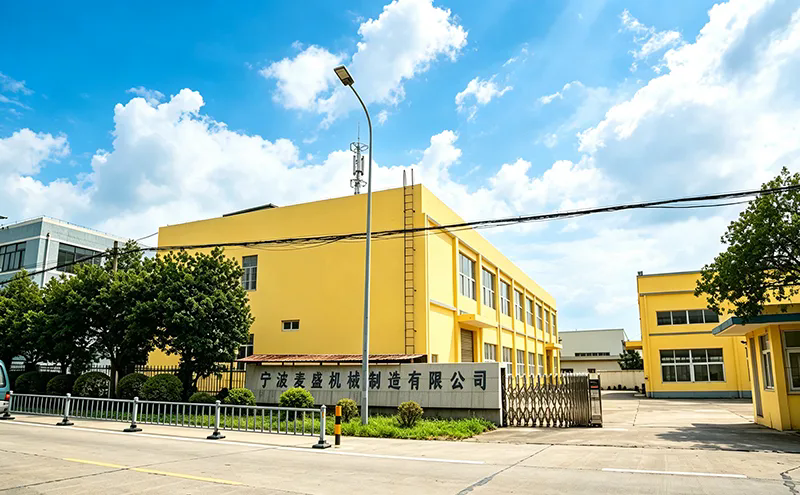
Ningbo Maixun Machinery Manufacturing Co., Ltd, established in 1999, specializes in precision auto parts including compressor valve plates, oil pans, cylinder heads, fan brackets, and timing covers. Guided by a people-oriented, quality-first philosophy, we have built a stable global business system. Our 30,000m² factory features a 7,000m² modern workshop in Jiangbei Zhuangqiao Industrial Zone, equipped with dedicated CNC, milling-drilling, and turning production lines. Full testing equipment and strict on-site management ensure stable efficiency and reliable quality, making us a trusted partner for customers worldwide.
From the high-purity steel that forms its core to the advanced sensors that may one day predict its health, the Auto Bearing has undergone a remarkable transformation. Today's Auto Bearing is a testament to the power of systematic engineering: material science, precision manufacturing, sealing technology, and emerging smart systems have all converged to create a component of extraordinary reliability. The result is a vehicle that is safer, more efficient, and longer-lasting than any that came before. At Ningbo Maixun Machinery Manufacturing Co., Ltd, we are proud to contribute to this story of progress. Our commitment to quality, precision, and customer satisfaction drives us to constantly improve our Auto Bearing products and processes.
If you are seeking a reliable partner for your auto bearing needs, we invite you to contact us. Whether you are a distributor, an OEM, or a maintenance professional, we offer a complete range of Auto Bearing products backed by extensive technical expertise and a commitment to excellence. Let's discuss how our solutions can meet your specific requirements. Contact Ningbo Maixun Machinery Manufacturing Co., Ltd today for a consultation or a quote. We are your global partner in automotive reliability.