
When automotive hose and pipeline connections must withstand vibration, temperature changes, and long-term mechanical stress, a reliable Cast Iron Car Clamp can make a significant difference. Maisheng manufactures durable cast iron clamps for automotive aftermarket and OEM applications, combining controlled casting, dimensional inspection, and performance validation to support dependable clamping in demanding engine environments.
A car clamp may appear to be a small component, but its role in maintaining the stability and sealing integrity of hoses, pipelines, and connected assemblies is important. Cast iron is particularly suitable for applications where structural rigidity, vibration resistance, heat tolerance, and long-term dimensional stability are required.
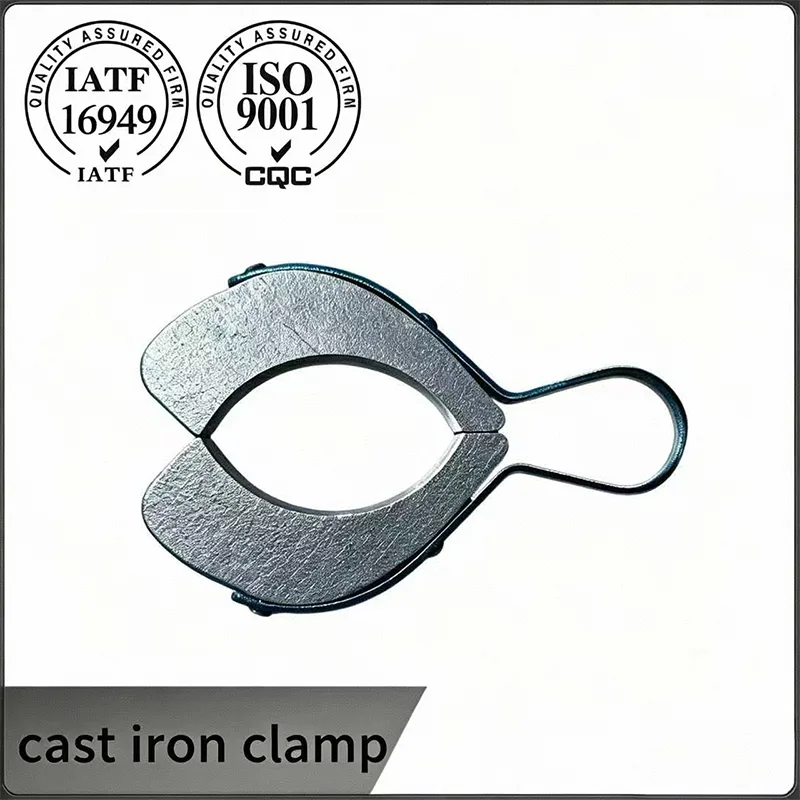
A Cast Iron Car Clamp is a mechanical fastening component designed to secure hoses, pipelines, or other cylindrical automotive components in their intended position. Depending on the vehicle and application, the clamp may be used around engine pipelines, exhaust-related assemblies, hydraulic lines, or other connections exposed to vibration and temperature fluctuations.
Unlike lightweight fastening components that may be more vulnerable to deformation under continuous mechanical stress, cast iron provides a rigid structural foundation. This makes it suitable for applications where stable clamping force is more important than minimizing component weight.
For automotive aftermarket buyers, an effective clamp should provide more than simple mechanical fastening. It should offer:
Maisheng develops cast iron clamps according to OEM installation benchmarks and can support regular aftermarket sourcing as well as customized requirements.
Material selection directly influences the service life of a clamp. In demanding automotive environments, components can experience continuous vibration, thermal expansion and contraction, moisture, oil mist, and contact with cooling-system vapors.
Cast iron offers several characteristics that can be advantageous in these conditions.
| Performance Factor | Benefit of Cast Iron Construction | Typical Application Concern |
|---|---|---|
| Structural rigidity | Helps maintain stable clamping geometry | Engine vibration and mechanical loads |
| Vibration damping | Helps reduce transmission of cyclic vibration | Long-term engine operation |
| Heat resistance | Suitable for demanding temperature environments | Engine and exhaust-adjacent applications |
| Dimensional stability | Supports consistent installation | Repeated thermal expansion and contraction |
| Mechanical strength | Provides robust support around connected components | Heavy-duty automotive and industrial systems |
Maisheng's product information specifies a minimum tensile strength target of 200 MPa and a predominantly pearlitic matrix. Metallographic inspection is also used to examine graphite flake type and distribution, helping control the material structure of the casting.
The manufacturing process has a direct impact on the consistency and reliability of cast components. For a Cast Iron Car Clamp, controlling the casting process, metallurgy, machining, finishing, and final inspection is essential.
The clamp body is produced using a resin-bonded sand casting process. This method is suitable for producing complex cast components while maintaining controlled dimensional characteristics and a relatively smooth surface profile.
The chemical composition of each melt is controlled and recorded. Test bars from each heat are subjected to tensile and hardness verification, while metallographic samples are examined to evaluate graphite structure and distribution.
After shakeout and shot blasting, the casting receives finishing treatment and rust-preventive coating. These processes help improve surface condition and provide additional protection during storage, transportation, and service.
Dimensional gauges and visual inspections are used to identify potential casting defects and dimensional deviations. Consistent dimensions are especially important when the clamp is intended as an aftermarket replacement for an existing component.
This controlled production sequence helps transform a basic cast component into a functional automotive fastening part suitable for repeat procurement.
A high-quality automotive clamp should be evaluated under conditions that resemble actual service rather than relying solely on visual inspection.
Maisheng's published validation information includes several performance checks:
These tests are particularly relevant to buyers sourcing components for heavy-duty vehicles, machinery, and other equipment where repeated vibration and temperature cycling can accelerate component fatigue.
Cast iron clamps are not limited to passenger-car maintenance. Their structural characteristics make them useful across several demanding transportation and industrial applications.
Engine compartments expose components to vibration, heat, oil mist, and changing temperatures. A properly sized cast iron clamp can provide stable mechanical support for relevant hose and pipeline assemblies.
Heavy-duty vehicles often operate under higher vibration and mechanical loading than passenger cars. Cast iron clamping components can therefore be considered for suitable engine and pipeline applications.
Construction and agricultural equipment frequently operates in dusty, humid, high-vibration environments. Robust mechanical fastening can help maintain the stability of connected pipelines.
High-pressure hydraulic oil pipelines require reliable support to reduce unwanted movement and mechanical stress. Correct clamp selection and installation remain essential for safe and stable operation.
Outdoor industrial equipment may encounter humidity, temperature fluctuations, vibration, and exposure to environmental contaminants. Properly manufactured cast iron clamps can be suitable for selected long-term pipeline-support applications.
Choosing the right Cast Iron Car Clamp starts with dimensional compatibility. An incorrectly sized clamp may provide insufficient holding force or create excessive stress during installation.
Buyers should evaluate the following factors:
For silicone hoses, Maisheng's product guidance notes that a clamp approximately 1–2 mm smaller than the measured diameter may be appropriate in certain applications because of the material's compression characteristics. However, the final size should always be confirmed against the actual hose material, installation structure, and manufacturer recommendations.
For automotive components, quality assurance should cover the complete manufacturing chain rather than only the finished product.
Maisheng states that its foundry and finishing operations work under an IATF 16949-certified management system and draw on more than 25 years of component manufacturing experience. Incoming raw materials are spectrographically verified, while melt chemistry is recorded against casting batch information for traceability.
The quality-control process includes:
For OEM projects, production documentation can also include material certifications, process flow diagrams, control plans, and initial capability studies. This documentation can be valuable for professional purchasing departments that require consistent supplier quality management.
When purchasing automotive clamps from a China manufacturer or supplier, buyers should look beyond unit price. A reliable sourcing decision should consider material consistency, manufacturing capability, dimensional control, testing procedures, customization support, and traceability.
| Buyer Requirement | What to Verify | Why It Matters |
|---|---|---|
| Material | Cast iron grade and material documentation | Influences strength and service performance |
| Dimensions | Clamp diameter and installation geometry | Prevents replacement mismatch |
| Manufacturing | Casting and finishing processes | Supports repeatable production quality |
| Testing | Strength, hardness, thermal, and vibration validation | Provides evidence of product reliability |
| Quality system | Relevant automotive quality-management certification | Helps manage supplier risk |
| Customization | OEM dimensions, molds, and technical support | Useful for aftermarket and OEM programs |
For wholesalers, distributors, repair-market suppliers, and OEM purchasing teams, this approach helps distinguish a professionally controlled automotive component from a generic low-cost alternative.
They can be suitable for demanding applications involving automotive engine pipelines, heavy trucks, construction machinery, agricultural vehicles, hydraulic oil pipelines, and selected industrial fluid systems where vibration, heat, and mechanical loads are present.
Common causes can include excessive bolt torque, long-term vibration fatigue, severe corrosion, an incorrectly sized clamp, or rigid impact caused by a damaged or missing buffer component. Correct installation torque and dimensional matching are therefore important.
Measure the outside diameter of the hose or pipeline at the clamping location using a caliper. Also check the original OEM part number and installation geometry whenever available. For customized requirements, provide the supplier with accurate dimensional information and application details.
Yes. OEM-oriented clamp programs can be developed around specific dimensions, installation requirements, and application conditions. Providing drawings, samples, OEM part numbers, or dimensional specifications can help the manufacturer evaluate the appropriate solution.
Check the supplier's casting capability, material-control procedures, dimensional inspection, testing records, quality-management system, traceability, OEM customization capability, and experience with automotive components. These factors are generally more meaningful indicators of long-term supply reliability than price alone.
A properly engineered Cast Iron Car Clamp can provide dependable mechanical support where automotive hoses and pipelines are exposed to vibration, thermal cycling, and demanding operating conditions. From resin-bonded sand casting and metallurgical control to dimensional inspection and endurance testing, every stage of manufacturing can influence final performance. For distributors, OEM buyers, and automotive aftermarket businesses seeking a dependable China manufacturer, Maisheng offers cast iron clamp solutions with OEM-oriented customization and quality-control capabilities. If you are looking for the right specification, replacement solution, or customized production program, contact us to discuss your requirements and receive professional product support.