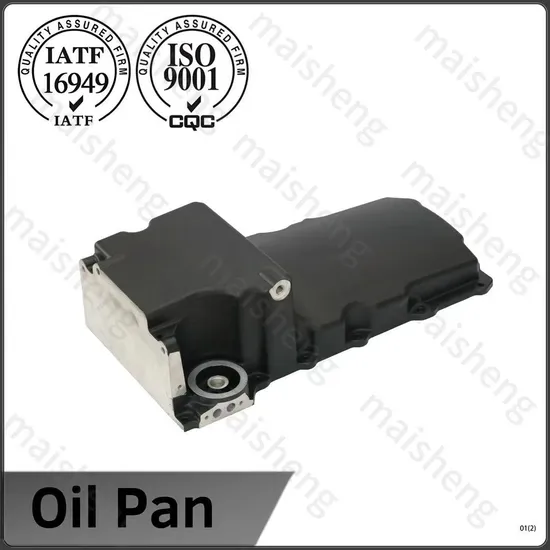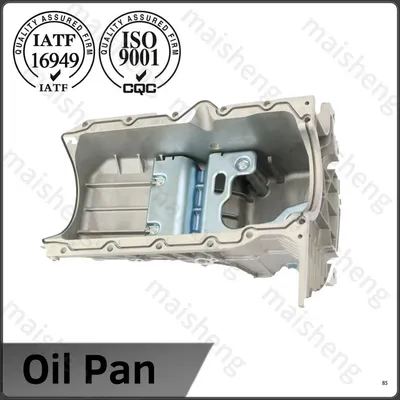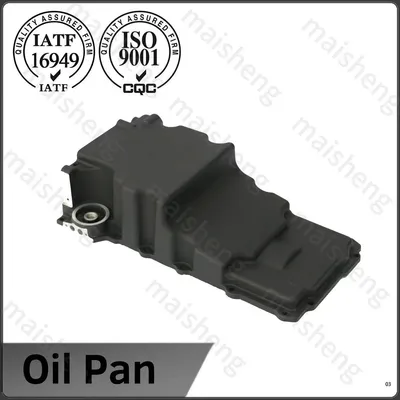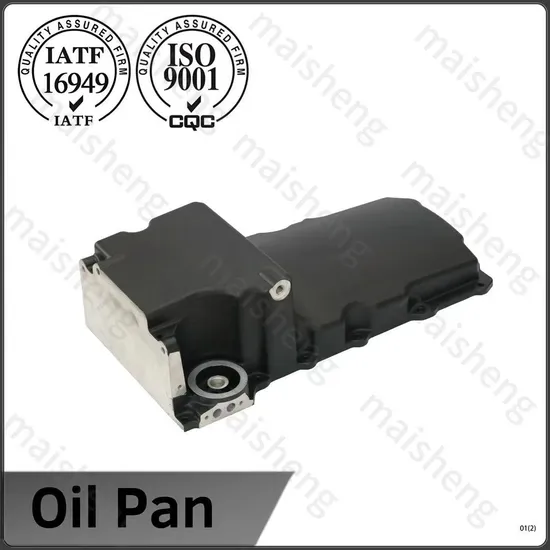

In recent years, the global automotive aftermarket has undergone obvious structural changes, with lightweight, high heat dissipation and long-service-life engine accessories gradually replacing traditional low-cost spare parts. Among many upgraded engine bottom components, the Aluminum oil pan has become a mainstream replacement part recognized by European, American and Southeast Asian markets. As a key component responsible for storing engine oil, maintaining lubrication stability and protecting internal crankshaft and connecting rod structures, the oil pan’s material and manufacturing process directly determine the engine’s daily operating stability and long-term maintenance cost. More professional auto repair institutions and overseas distributors have begun to abandon traditional stamped steel and cast iron oil pans and prefer high-standard aluminum alloy products, which brings new industry trends to the global engine parts replacement market.
From a professional automotive manufacturing perspective, steel and cast iron oil pans have inherent technical limitations that cannot be completely solved through simple process improvement. Stamped steel oil pans feature low cost and simple production, but their thin wall thickness leads to weak impact resistance. During daily driving, road gravel and chassis friction are likely to cause deformation and oil leakage. Cast iron oil pans are sturdy and impact-resistant, but they are too heavy, seriously affecting engine lightweight optimization and vehicle fuel economy. In addition, cast iron materials have poor thermal conductivity and are prone to rust after long-term use, increasing the risk of internal contamination of engine oil. In contrast, aluminum alloy materials perfectly balance lightweight performance, structural rigidity and heat dissipation efficiency, making them the most ideal material for modern high-performance engine oil pans.
Professional industry testing data shows that high-quality aluminum alloy engine oil pans can improve engine heat dissipation efficiency by more than 30% compared with cast iron products, effectively controlling oil temperature during high-load operation and avoiding oil deterioration caused by overheating. At the same time, the overall weight is reduced by nearly 40%, which helps optimize engine load and improve vehicle power response and fuel economy. Regular standardized Aluminum oil pan products adopt one-piece casting and CNC precision sealing surface processing technology. The flat and smooth installation surface can effectively improve the fitting degree with the engine block, greatly reducing the failure rate of oil leakage, which is the most common problem in aftermarket replacement parts. For modified vehicles, high-speed running engines and light-duty industrial engines, aluminum alloy oil pans can maintain stable structural performance under long-term high-temperature and high-vibration working conditions, with lower failure rate and longer service life than traditional materials.
With the continuous improvement of global automobile emission standards and lightweight design requirements, major OEM manufacturers have gradually popularized aluminum alloy engine parts in new models. Driven by the original factory technical standards, the aftermarket is also accelerating product iteration. At present, low-end single-focus cost oil pan products are gradually eliminated by the market, while high-quality alloy replacement parts with stable performance, strong compatibility and high cost performance are becoming the mainstream procurement choice for overseas professional buyers. For auto parts exporters and local distributors, selecting standardized and fully tested aluminum alloy oil pan products can effectively reduce after-sales problems, stabilize customer reputation and improve long-term market competitiveness.
In the future, with the further upgrading of engine thermal management technology and lightweight design concepts, high-precision aluminum alloy engine accessories will further occupy the mainstream share of the global aftermarket. The industry will pay more attention to product stability, heat dissipation optimization and installation accuracy. Professional manufacturers will continue to optimize the structural design and production technology of the Aluminum oil pan to meet the increasingly stringent quality standards of global automobile maintenance and replacement markets. For global auto parts practitioners, understanding the material advantages and technical iteration trends of aluminum alloy oil pans will help them accurately grasp market trends and provide more professional and reliable engine maintenance solutions for terminal car owners.